Tubular Battery is Expensive, Lithium is Cheap — The Full Cost Truth India 2026
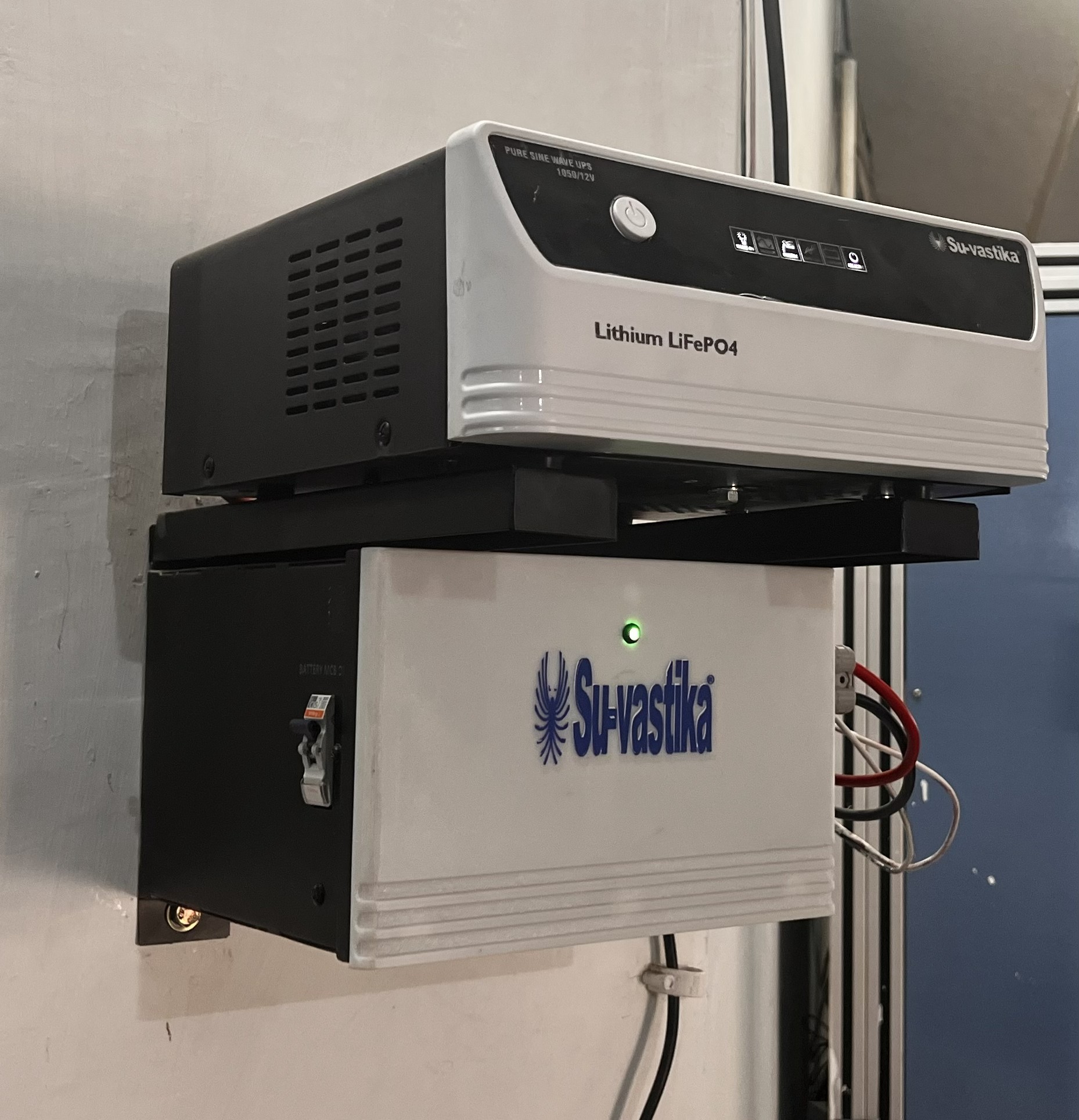
The tubular battery looks cheap at ₹12,000–₹16,000. The lithium looks expensive at ₹20,000–₹28,000. Most buyers stop the comparison right there. That is the mistake that costs them ₹20,000–₹30,000 over the next decade.
I made this argument at Su-vastika years ago — when lithium was still priced at ₹40,000 and above. Even then, once you accounted for cycle life, maintenance, space, logistics, and the absence of any battery intelligence in a lead acid system, tubular was already the expensive battery. In 2026, with lithium prices down 40%, the case is overwhelming.
This article shows you the complete picture — backup time tests across 12V, 24V, 48V, and 96V systems, all the hidden costs the sticker price hides, and the C-rating deception that makes a "150Ah" tubular perform like a far smaller battery at real inverter loads.
1. The C-Rating Trap: Why 150Ah Tubular ≠ 150Ah Lithium
Every battery has a "C-rating" — a number that tells you at what speed the capacity was measured. Think of it like fuel economy in cars: 20 km/litre at 60 km/h is very different from 20 km/litre at 120 km/h.
C20 = the battery was discharged over 20 hours at a very low current. For a 150Ah battery, that means just 7.5 amperes — barely enough to power two LED bulbs. This is a laboratory standard designed in the 1950s for industrial standby applications.
C1 = the battery was discharged over 1 hour at full inverter load. For a 150Ah battery, that is 150 amperes — which is exactly how inverters draw power during power cuts.
Tubular lead acid batteries are rated C20. Lithium LFP batteries are rated C1.
So what happens to a C20 tubular battery when your inverter runs a 500W load?
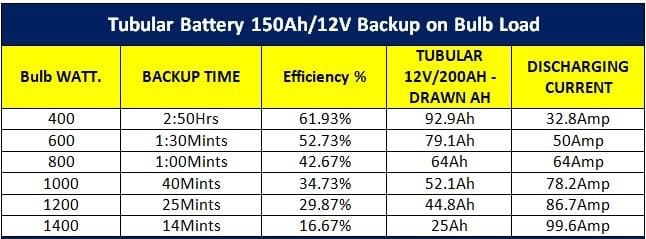
A 500W load on a 12V system draws 41.7 amperes. That is 5.6 times the C20 test rate. At this higher discharge current, the lead acid battery loses capacity due to electrochemical losses inside the cells — a well-documented effect. Instead of 150Ah, it delivers roughly 90–100Ah at best.
Now apply the second limitation: a lead acid battery should not be discharged below 50% of its capacity if you want it to survive 3–4 years. Take 50% of 90–100Ah and you are left with 45–50Ah of usable energy from a battery labeled "150Ah."
At 12V, that is approximately 540–600 Wh of real, usable energy — from a battery with a nameplate of 1,800 Wh.
A 1,024 Wh lithium LFP battery, rated at C1 (actual inverter rate), has no capacity loss at high discharge. At 80% depth of discharge, it delivers 820 Wh of usable energy.
The arithmetic is clear: 1,024 Wh lithium = more real backup than 1,800 Wh tubular. Every time.
| Specification | 150Ah C20 Tubular | 1,024 Wh Lithium LFP |
|---|---|---|
| Nameplate capacity | 1,800 Wh (150Ah × 12V) | 1,024 Wh |
| C-rating (test standard) | C20 — slow lab test | C1 — real inverter rate |
| Usable depth of discharge | 50% DoD for long life | 80% DoD standard |
| Capacity loss at high load | 30–40% at inverter rates | None |
| Usable energy at inverter load | ~540–600 Wh | ~820 Wh |
| Weight (12V single bank) | 65 Kg | 8 Kg |
The tubular nameplate bar is wider — but after real-world losses, the lithium battery with the smaller number on the label delivers 52% more usable energy. (Battery University: C-rate explained →)
And the higher your load — the wider the gap. Look at the 12V data: at 400W, lithium gives you 15 minutes more. At 1,200W, the tubular lasts just 25 minutes while lithium lasts 50 minutes — double the backup. This is the C-rating effect in action: high current discharge collapses lead acid capacity, while lithium is unaffected.
2. Real Backup Time Data: 12V, 24V, 48V, and 96V Systems
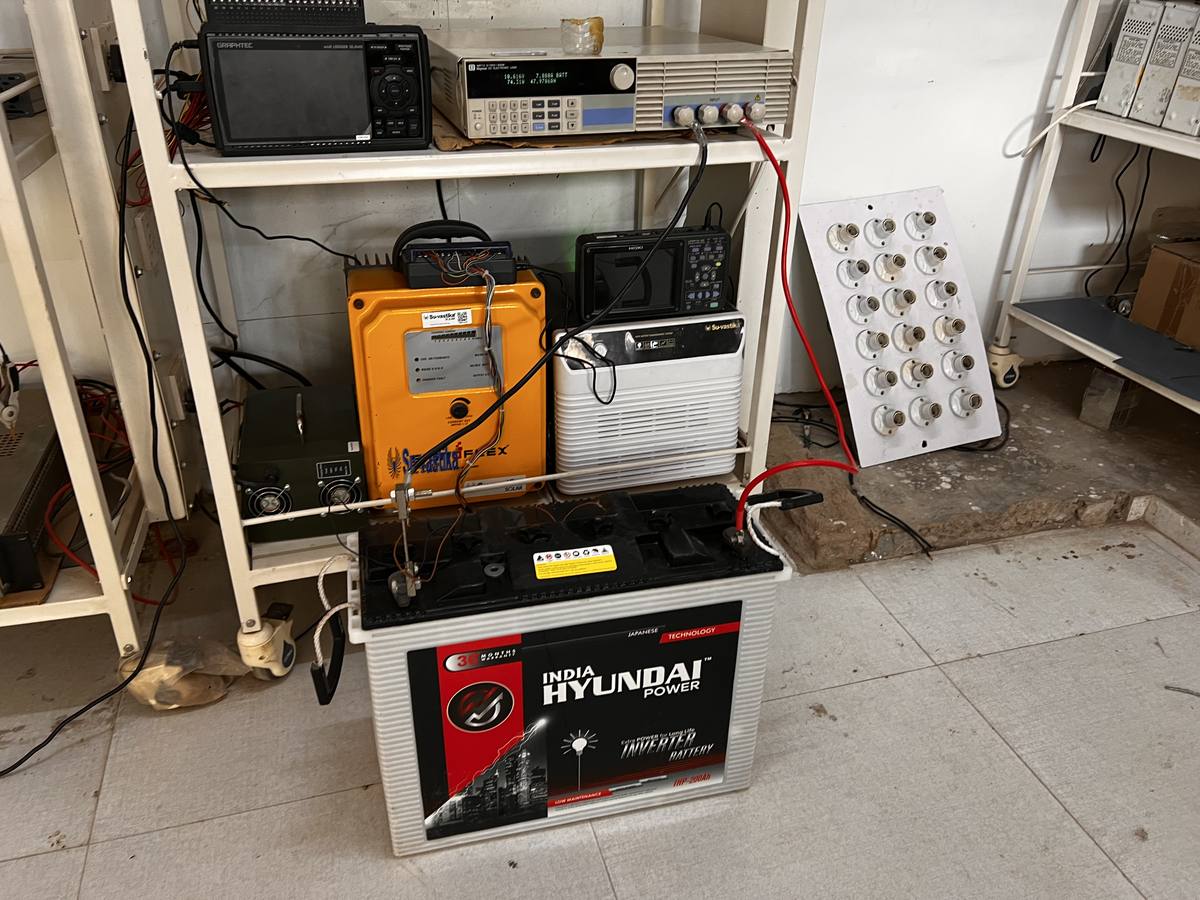
The data below is from actual inverter backup tests across all four common system voltages used in Indian homes and offices. Every number is a measured result — not a calculation or estimate. The lead acid battery in every test is a 150Ah C20 Tubular battery from a quality Indian manufacturer.
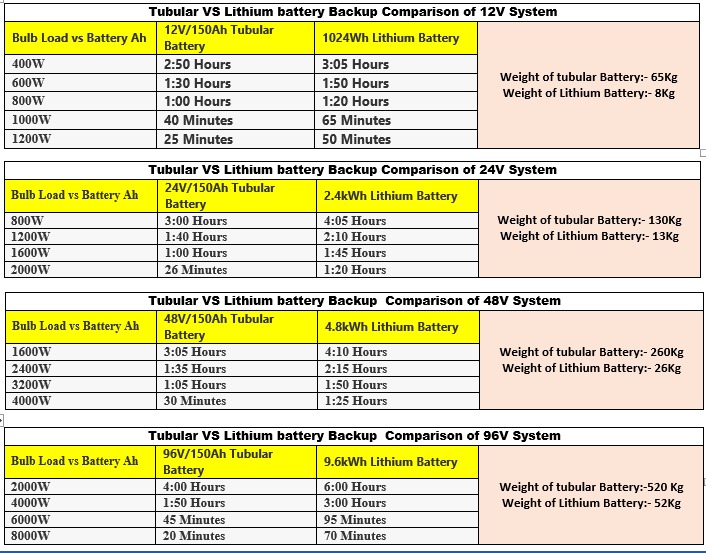
12V System: 150Ah/12V Tubular vs 1,024 Wh Lithium
| Load | 150Ah/12V C20 Tubular Weight: 65 Kg | 1,024 Wh Lithium Battery Weight: 8 Kg |
|---|---|---|
| 400W | 2 hrs 50 min | 3 hrs 05 min |
| 600W | 1 hr 30 min | 1 hr 50 min |
| 800W | 1 hr 00 min | 1 hr 20 min |
| 1,000W | 40 min | 65 min |
| 1,200W | 25 min | 50 min — 2× more backup |
At 1,200W the lithium gives exactly double the backup of the tubular — from a battery with a smaller nameplate Wh number. This is the C20 vs C1 rating difference made visible.
Same scale across all bars. The tubular advantage collapses at high loads because C20-rated batteries were never designed for inverter discharge rates.
24V System: 150Ah/24V Tubular vs 2.4 kWh Lithium
| Load | 150Ah/24V C20 Tubular Weight: 130 Kg | 2.4 kWh Lithium Battery Weight: 13 Kg |
|---|---|---|
| 800W | 3 hrs 00 min | 4 hrs 05 min |
| 1,200W | 1 hr 40 min | 2 hrs 10 min |
| 1,600W | 1 hr 00 min | 1 hr 45 min |
| 2,000W | 26 min | 1 hr 20 min — 3× more backup |
At 2,000W on a 24V system, the tubular effectively collapses to 26 minutes while lithium maintains 80 minutes — the high current demolishes lead acid capacity at this rate.
48V System: 150Ah/48V Tubular vs 4.8 kWh Lithium
| Load | 150Ah/48V C20 Tubular Weight: 260 Kg | 4.8 kWh Lithium Battery Weight: 26 Kg |
|---|---|---|
| 1,600W | 3 hrs 05 min | 4 hrs 10 min |
| 2,400W | 1 hr 35 min | 2 hrs 15 min |
| 3,200W | 1 hr 05 min | 1 hr 50 min |
| 4,000W | 30 min | 1 hr 25 min — nearly 3× more |
A 260 Kg tubular battery bank vs a 26 Kg lithium pack — same comparison, same result. At peak commercial load the tubular is finished in 30 minutes while lithium runs for 85 minutes.
96V System: 150Ah/96V Tubular vs 9.6 kWh Lithium
The 96V system is used in commercial buildings, large offices, hospitals, and industrial UPS applications. The numbers here are especially stark.
| Load | 150Ah/96V C20 Tubular Weight: 520 Kg | 9.6 kWh Lithium Battery Weight: 52 Kg |
|---|---|---|
| 2,000W | 4 hrs 00 min | 6 hrs 00 min |
| 4,000W | 1 hr 50 min | 3 hrs 00 min |
| 6,000W | 45 min | 95 min |
| 8,000W | 20 min | 70 min — 3.5× more backup |
520 Kg of lead acid gives 20 minutes at 8kW load. 52 Kg of lithium gives 70 minutes. The weight is 10× less and the backup is 3.5× more. For commercial facilities evaluating battery room infrastructure, this data changes every calculation.
The pattern is identical across 12V, 24V, 48V, and 96V systems: at light loads the lithium advantage is modest (15–20 minutes). As load increases, the tubular capacity collapses while lithium holds steady. At peak household loads of 1,000–1,200W, lithium gives double the backup. At commercial loads on 96V systems, it gives 3.5× more backup.
This is not a brand difference or a product quality difference. It is the C20 vs C1 rating difference — physics working exactly as expected. The tubular is not a bad battery. It is a battery being used at 5–10× its rated discharge rate, which is what inverter use always demands.
3. Price Comparison — Based on Equivalent Backup, Not Nameplate Ah
Now that we know what the batteries actually deliver, the price comparison looks completely different from the shelftag comparison most buyers make.
Do not compare ₹/Ah. Compare ₹/actual backup hour at your real load. Here are current retail prices for equivalent backup configurations in India (May 2026):
| System | C20 Tubular Option | Lithium LFP Option | Lithium Premium |
|---|---|---|---|
| 12V system | 150Ah Tubular ₹12,000–₹16,000 |
1,024 Wh LFP ₹20,000–₹28,000 |
~1.7× upfront Lithium gives MORE backup |
| 24V system | 2× 150Ah Tubular ₹24,000–₹32,000 |
2.4 kWh LFP ₹40,000–₹55,000 |
~1.6× upfront Lithium gives MORE backup |
| 48V system | 4× 150Ah Tubular ₹48,000–₹64,000 |
4.8 kWh LFP ₹75,000–₹95,000 |
~1.5× upfront Lithium gives MORE backup |
The critical point: the lithium option costs 1.5–1.7× more upfront and delivers more backup — not just equal backup. When buyers quote the tubular as "cheaper," they are comparing a product that delivers ~540 Wh usable against one that delivers ~820 Wh usable and pretending they are the same product.
For today's live prices updated daily, visit our Home Inverter Battery Price Index →
4. The Hidden Costs the Sticker Price Never Tells You
The upfront price gap is the only number most buyers compare. Here are the costs that never appear on the shelf tag — but appear on your bank statement and in your daily inconvenience.
No BMS: Flying Blind on a ₹15,000 Investment
A lithium LFP battery ships with a Battery Management System (BMS) built in. The BMS monitors every cell in real time: voltage, temperature, state of charge, state of health. It prevents overcharge, over-discharge, short circuits, and thermal events. It gives your inverter data it can use to optimise charging. Most modern lithium packs allow you to check battery status from your phone.
A tubular battery has none of this. You have no idea:
- How much charge is actually remaining (the inverter's bar display is an approximation at best)
- Whether the battery is running at 80% health or 40% health
- Whether it is being overcharged on a hot day (which is the primary cause of early failure)
- When it is approaching end of life — until it simply stops working
Flying blind on a ₹15,000 investment, in a country where summer temperatures regularly cross 45°C and voltage fluctuations are common, is the definition of expensive.
No Cell Balancing: The Silent Killer in Every 12V Tubular Battery
A 12V lead acid battery contains six 2V cells connected in series. These six cells are never perfectly identical — they age at different rates, absorb water at different rates, and develop slightly different internal resistances over time.
Without active cell balancing, the weakest cell gets over-discharged first on every cycle. An over-discharged cell sulfates faster. A sulfated cell loses capacity faster. Within 1–2 years, one weak cell drags the performance of all five healthy cells down — the battery reports "full" but delivers 60% of rated capacity because of one degraded cell you cannot see or measure.
Lithium BMS actively balances all cells — equalising charge across the pack on every cycle. The result: consistent performance for the full rated lifespan, not progressive invisible degradation.
No Specification Data: You Are Buying Completely Blind
Ask any tubular battery manufacturer for their product's discharge curve at C1 rate. Ask for cycle life data at 50% DoD in 40°C ambient temperature. Ask for State of Health degradation figures after 200 cycles. You will get silence — or a single number: the C20 Ah rating on the label.
Lithium LFP manufacturers publish full specification sheets: capacity at C1, C5 and C10 discharge rates, cycle life at 80% DoD across temperature ranges, thermal derating curves for 45°C operation (critical for Indian summers), BMS protection thresholds, and calendar ageing projections. You know exactly what you are buying and what to expect after two years of daily cycling.
With a tubular battery, you have no way to know whether your battery is at 100%, 70% or 50% State of Health — until it fails during a power cut. No data means no predictive replacement planning, no warranty claims backed by performance evidence, and no accountability from the manufacturer. You discover the degradation when the lights go out.
Maintenance: The Monthly Tax You Forget to Budget
Every tubular battery requires distilled water top-up every 2–3 months. In practice, most households delay this — which accelerates plate degradation. Proper maintenance means:
- Purchasing distilled water (not tap water — minerals damage the cells)
- Checking electrolyte level in all cells
- Cleaning terminal corrosion (lead acid terminals corrode; corroded terminals increase resistance and reduce efficiency)
- Periodic equalisation charges — a special overcharge that re-homogenises the electrolyte
- Ventilated, accessible location — the battery releases hydrogen gas during charging, which means no enclosed spaces, no sparks nearby
Lithium: sealed, zero maintenance, no fumes, install anywhere. Lithium LFP batteries sold in India for inverter applications must comply with BIS standard IS 16270, which mandates BMS as a compulsory safety and protection component.
Replacement Logistics: The Cost Nobody Budgets
A 150Ah tubular battery weighs 65 Kg. When it dies after 3–4 years, you need to:
- Arrange transport to bring the new 65 Kg battery home (delivery charges: ₹500–₹1,500)
- Pay installation labour to disconnect, remove, and reinstall (₹500–₹1,000)
- Dispose of the old battery — lead acid is hazardous waste; the buy-back value from scrap dealers has declined as lead prices fluctuate
- Repeat this every 3–4 years
For a 24V system (130 Kg) or 48V system (260 Kg), the logistics cost and physical complexity multiply accordingly. A 260 Kg battery bank replacement in a second-floor apartment requires professional installation and often structural considerations.
Lead acid battery disposal in India is regulated under the CPCB Battery Waste Management Rules 2022 — old batteries must be returned to authorised dealers or recyclers. Lithium: 8–13 Kg, single person can carry, no replacement for 8–10 years, no hazardous disposal.
Tubular battery's real cost includes: replacement every 2–3 years · maintenance labor and materials · replacement logistics (transport + installation) · no BMS data so no optimisation · cell imbalance degradation you cannot prevent · ventilated dedicated space · corrosion management.
Lithium battery's real cost includes: the purchase price. That's it.
5. The 5-Year Cost: Lithium Pays Off Within Its First Lifespan
The Ah capacity gap matters for daily backup. But the cycle life gap is where the real money story lives.
- LFP Lithium: 2,000–2,500 charge-discharge cycles at 80% DoD. At one cycle per day this is 5–6 years of real-world life in Indian conditions.
- C20 Tubular Lead Acid: 400–800 cycles at 50% DoD — and that drops further when routinely discharged at C3–C5 rates. Add 45°C summer heat and frequent voltage fluctuations. Honest real-world life in Indian cities: 2–3 years.
A home with daily power cuts in a tier-2 city will replace a tubular battery at least twice in 5 years. The lithium battery is still on its first purchase.
| Cost Item (12V System) | C20 Tubular | Lithium LFP |
|---|---|---|
| First purchase | ₹14,000 | ₹24,000 |
| Replacement at year 2–3 | ₹14,000 | ₹0 — still running |
| Maintenance (water, service) | ₹2,000–₹4,000 | ₹0 |
| Energy waste (charging losses) | ~20–25% loss | <5% loss |
| 5-year total cost (approx.) | ₹28,000–₹32,000 | ₹24,000 |
Within the very first lithium battery lifespan, the tubular buyer has already spent more and replaced the battery once. Lithium costs less in the same 5-year window and delivers better backup every single day. For 24V and 48V systems the savings scale up proportionally.
6. The Weight Problem Nobody Talks About
The weight difference between lead acid and lithium is one of the most underappreciated factors in the Indian market. Here is what the numbers look like:
For apartment dwellers in India — now over 40% of the urban population — a 130–520 Kg lead acid bank is not just inconvenient, it is sometimes structurally impossible. Lithium completely eliminates this constraint. For commercial facilities, replacing a 520 Kg battery room with a 52 Kg wall-mounted pack is a genuine infrastructure simplification.
7. When Lead Acid Still Makes Sense
I believe in giving the full picture. Lead acid is not obsolete — it is the right choice in these specific scenarios:
- Very tight budget, very light load: If your total load is under 300W (3–4 LED lights and a fan) and power cuts are under 2 hours a day, a tubular battery at ₹12,000–₹14,000 will last 4–5 years at low cycle rates. The lithium payback period stretches beyond 6 years — less urgent.
- Old inverter that does not support lithium: Inverters manufactured before 2019 typically do not have a lithium charging mode. Connecting lithium to an old inverter will overcharge the cells and void the warranty. Either upgrade to a lithium-compatible inverter (₹8,000–₹15,000 extra) or stay with tubular until you replace the inverter.
- Areas without lithium service networks: Lead acid can be serviced, repaired, or replaced by any local electrician or battery shop in India. Lithium batteries require brand service centres — still limited in many tier-3 and rural areas. If your nearest brand service point is 3+ hours away, the convenience advantage of lithium shrinks.
- Short-term or rental situations: If you move every 2–3 years or are in rental accommodation, the lithium premium takes too long to recover. A tubular battery is the financially sensible short-term choice.
Choose lithium if: daily power cuts, modern inverter (post-2019), staying in the same home for 5+ years, apartment with weight/fume constraints, or running loads above 500W regularly.
Choose tubular if: very low budget, light load under 300W, old inverter you cannot upgrade immediately, rural area with no lithium service, or short-term accommodation.
FAQ: Lithium vs Lead Acid Battery India 2026
