Tesla Power Launches ReStore: Refurbished Battery Brand in India
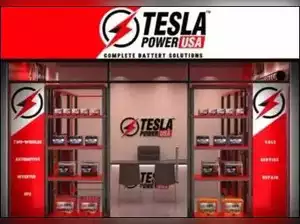
ReStore: The Refurbished Battery Brand by Tesla Power, a company focusing on batteries, has launched a new brand called ReStore. This initiative is the first-of-its-kind refurbished battery program in India.
Key Points:
ReStore: Refurbishes used lead-acid batteries, extending their lifespan by 1-2 years.
Cost-effective: Refurbished batteries cost nearly half the price of a new one and come with a warranty.
Economic benefit: Creates new jobs – Tesla Power expects 30,000 battery refurbishing centers to open, generating over 1 lakh jobs.
Policy Alignment: Complies with India’s “Battery Waste Management Rules 2022” that promotes battery refurbishing.
Sustainable Solution: Supports the Indian government’s focus on circular economy and sustainable waste management.
ReStore: The Refurbished Battery Brand by Tesla Power
ReStore: The Refurbished Battery Brand by Tesla Power
Tesla Power today announced the launch of ReStore, which it said is India’s first and foremost refurbished battery brand. The company is planning to launch 5000 “ReStore Battery Refurbishing Centers” in India by 2025 (500 of which are already operational).
The company said that its proprietary EBEP technology significantly extends the lifespan of all types of Lead-acid batteries, including tall tubular inverter batteries and UPS VRLA batteries, offering a cost-effective solution that can extend the battery’s life by 1 to 2 years by refurbishing them. The refurbished batteries under the brand name of “ReStore” will be sold to the customer at almost half of the cost of a new inverter battery along with the warranty, the company says.
“The launch of this brand “ReStore” complies with the “Battery Waste Management Rules 2022” wherein the CPCB has recognized Battery Refurbishing as an approved business activity. This change in the policy and rules will open up a new service industry and approximately 30,000 battery refurbishment centers are expected to open up in India giving employment opportunities to more than 1 Lac people,” Tesla Power India said in a release.
ReStore: The Refurbished Battery Brand by Tesla Power
Tesla Power India said approximately 10 crore lead acid batteries are scrapped and replaced every year in India, costing Rs.40,000 crore to the Indian economy. Hence, the company added, its refurbished battery business will “address both economic strains from battery replacements and environmental hazards linked to improper disposal, and complying to the Indian government’s commitment to promoting circular economy and sustainability through innovative battery waste management policy”.
Vertiv™ Liebert® Power-UPS Lithium designed to provide reliable, economical, and long-lasting power protection for critical smaller spaces
Vertiv Introduces New Lithium-Ion UPS in North America, Lithium-ion batteries are widely used because the cost is going down, the energy density is increasing, and there are regular breakthroughs in the industry. Vertiv HPL is designed specifically for data centers.
Vertiv Introduces New Lithium-Ion UPS in North America
Redundancy within the battery management system design to improve reliability
Internal power supply, front access shipping, pre-assembled and factory tested to save on installation and maintenance costs
User-friendly display on the cabinet’s front door to deliver key status and system information
Monitors battery performance to provide safe and reliable protection
Secure communications via Modbus ip to local or remote monitoring systems
Delivers predictable runtime through the life of the battery
Can operate at higher temperatures than VRLA batteries which reduces cooling costs
Has a life that’s multiples longer than that of a VRLA battery and that brings a much better total cost of ownership for your system over the 10 years or more that you’ll operate a Vertiv HPL system
Compliant with current energy storage system certification requirements
Ready for immediate use with the most current and legacy three-phase ups systems from Vertiv
Vertiv Introduces New Lithium-Ion UPS in North America
Vertiv, a global leader in critical digital infrastructure and continuity solutions, announced the launch of its Vertiv™ Liebert® Power-UPS Lithium UPS system. This UPS is designed to protect various electronic devices from power disruptions, making it ideal for:
Retail point-of-sale (POS) equipment
Computers
Workstations
Wireless networks and routers
Surveillance systems
Key features of the Liebert Power-UPS Lithium UPS include:
Lithium-ion battery technology: Offers an 8 to 10-year expected battery life, significantly reducing replacement costs and lowering total cost of ownership.
Energy efficient and lightweight: This compact 400VA/240W 120V UPS system is ENERGY STAR-certified and weighs less than four pounds.
Flexible design: Allows for installation in various configurations, making it suitable for space-constrained environments.
High reliability: Can endure operating temperatures up to 104 degrees Fahrenheit (40 degrees Celsius), ideal for hot environments.
Reliable alarm management: Helps users identify and respond to power issues quickly.
Standard five-year warranty: Provides peace of mind for user devices.
Availability:
The Liebert Power-UPS Lithium UPS will be available in North America starting Q2 2023.
Vertiv will showcase the UPS at the NRF 2023 in New York (January 15-17).
Top 5 Solar Inverters in India: A Comprehensive Guide
Luminous
Luminous Solar, a division of Schneider Electric (after Schneider Electric acquired Luminous in 2018), is a leading player in the Indian solar industry, known for its focus on complete solar energy solutions. Here’s a breakdown of their key offerings:
Leading with Complete Solar Solutions:
One-Stop Shop: Luminous Solar goes beyond just inverters. They offer a comprehensive range of solar products and services, including:
Solar panels
Solar inverters (string inverters for grid-tied systems and hybrid inverters for both grid-tied and off-grid applications)
Batteries for energy storage
Solar charge controllers
Mounting structures
Balance of System (BOS) components
System design, installation, and commissioning services
After-sales service and support
This one-stop-shop approach simplifies the process for customers seeking a complete solar power system.
Top 5 Solar Inverters in India: A Comprehensive Guide
SMA India
SMA India Solar, a subsidiary of the renowned German company SMA Solar Technology, is a leader in the Indian solar inverter market. Here’s a breakdown of their strengths and offerings:
Leading with Innovation and Quality:
Global Expertise: SMA leverages over 40 years of global experience in solar inverter technology, ensuring high-quality and reliable products for the Indian market.
Focus on Efficiency: SMA inverters are known for their high efficiency rates, which means you get the most out of your solar energy production.
Advanced Technology: SMA incorporates cutting-edge features like:
SMA Smart Connected: This online monitoring platform allows you to track your system’s performance remotely, identify potential issues, and optimize energy generation.
SMA ShadeFix: This technology helps mitigate the impact of shading on solar panels, ensuring maximum power output even in non-ideal conditions.
Product Range for Diverse Needs:
Sunny Boy: This popular single-phase inverter series is ideal for residential solar power systems, with models ranging from 1kW to 6kW, catering to different rooftop sizes and power requirements.
Sunny Tripower: This three-phase inverter series is suitable for larger commercial applications or industrial setups.
String Inverters: SMA primarily offers string inverters, which handle the DC output from multiple solar panels connected in series before converting it to AC power.
Top 5 Solar Inverters in India: A Comprehensive Guide
Su-vastika Systems
Su-vastika Systems positions itself as a leading manufacturer of solar and lithium battery products in India. However, it’s important to acknowledge that they are a relatively new player compared to established brands. Here’s a breakdown of what we know about Su-vastika:
Suvastika goes beyond just inverters and offers a wider range of solar products, including:
Products:
Solar PCU (Power Control Unit): This combines an inverter with a battery backup system, ideal for off-grid or unreliable grid situations.
Lift Inverters: These inverters are designed to provide backup power for elevators in case of a grid outage.
Solar-powered UPS (Uninterruptible Power Supply): This uninterrupted power supply utilizes solar energy to provide backup power during outages.
Solar Inverters: They offer inverters for various applications, including single-phase and three-phase models, and possibly hybrid inverters for both on-grid and off-grid systems. Specific details on inverter models and capacities can be difficult to find online.
Lithium Battery Energy Storage Systems (ESS): Su-vastika offers LiFePO4-based lithium-ion battery storage solutions for solar systems, allowing you to store excess solar energy for later use.
Company Details and Leadership:
Founder: Kunwer Sachdev, a well-known figure in the Indian solar industry. He was previously the founder of Su-Kam, a leading solar inverter manufacturer, before leaving in 2018.
Headquarters: Located in Gurugram, Haryana, India (based on Google search results).
Top 5 Solar Inverters in India: A Comprehensive Guide
Delta Electronics:
Delta Electronics, a major player in the global electronics industry, doesn’t necessarily have one leading type of solar product. They excel in offering a comprehensive range of solutions for solar power systems. Here’s a breakdown of their strengths in the solar space:
Wide Range of Solar Inverters: Delta offers a broad portfolio of solar inverters catering to various needs, including:
Residential Inverters: Designed for rooftop solar installations on homes, known for their efficiency and ease of use.
Commercial Inverters: Suitable for larger commercial solar power plants, often featuring advanced grid management functionalities.
Utility-Scale Inverters: Made for massive solar farms, optimized for high efficiency and power handling capabilities.
String Inverters: The most common type, handling multiple solar panels connected in series.
Central Inverters: Manage the entire solar array’s DC power output before conversion to AC.
Microinverters: Attach to individual solar panels, maximizing efficiency at the module level.
Fimer(ABB is fimer now)
Fimer, which recently acquired Abbs’s inverter manufacturing, is a major player in the solar inverter space. The company supplies both single and three phase. These smart inverters typically range from 1.2 to 6 kW and can transfer data to user via ethernet of WLAN. Typical input voltages are in the range of 120-200 V Dc with peak efficiencies over 96%. These weigh around 15 kg and dimensions are 55.3*41.8*17.5 cm.
Lithium batteries are becoming increasingly popular for inverter systems due to several advantages over traditional lead-acid batteries.
Benefits:
Higher energy density: store more energy in a smaller space
Lighter weight: easier to transport and install
Longer lifespan: require less frequent replacement
Faster charging
More efficient: convert more stored energy into usable power
Lower maintenance costs
Applications:
Residential solar power systems
Off-grid and remote power solutions
Commercial and industrial inverter systems
Key Considerations:
Compatibility with inverter technology (voltage, charge/discharge rate, temperature range, safety features)
Battery Management Systems (BMS) to monitor and protect the battery
Cost analysis and return on investment (ROI) – upfront cost is higher, but long-term benefits outweigh the cost
Challenges and Future Trends:
Addressing safety concerns and thermal management
Advancements in lithium battery technology (higher energy density, discharge rates, lower cost)
Integration with smart grids and energy storage systems
These batteries provide a reliable, efficient, and long-lasting energy source. From residential to industrial applications, lithium batteries are revolutionizing the way we generate and store energy.
With their superior performance and ease of use, these batteries are becoming the go-to choice for powering all kinds of systems.
In this article, we’ll explore the evolution of inverter systems, the benefits of lithium batteries in inverter systems, their applications, key considerations, and more.
You may have heard of lithium batteries, but do you know what makes them so special?
Lithium batteries are a type of rechargeable battery, and they are increasingly popular in inverter systems due to their unique properties and advantages.
Lithium batteries can store more energy than other types of batteries, and they can also discharge their energy more quickly, making them ideal for many applications.
They also have a longer lifespan, so they require less maintenance and replacement than other types of batteries.
Going Green with Lithium Batteries for Inverter Systems
Lithium-ion batteries are widely used due to their high energy density and long lifespan, while LiFePO4 batteries offer a lower energy density with a longer life cycle.
In this discussion, we’ll explore how these two types of batteries work and their advantages and disadvantages for inverter systems.
In addition, we’ll explore some of the newer developments in lithium battery technology that offer even more benefits for inverters.
Lithium-ion Batteries
Lithium-ion batteries are increasingly becoming the top choice for inverter systems, offering impressive energy density and long-lasting performance. Here are the benefits:
Unique Properties and Advantages of Lithium Batteries
Unlocking the power of lithium batteries is like unlocking a vast treasure chest of benefits; they offer a range of unique properties and advantages that make them an attractive option for inverter systems.
To begin with, lithium batteries have a higher energy density than traditional lead-acid batteries, meaning they can store more energy in a smaller package. Additionally, lithium batteries are generally lighter than lead-acid batteries, making them easier to transport and install.
The unique properties and advantages of lithium batteries make them an ideal choice for inverter systems, offering a reliable and efficient power source.
Going Green with Lithium Batteries for Inverter Systems
The Evolution of Inverter Systems
Inverter systems have been around for decades, but the introduction of lithium batteries has revolutionized the way they function. Traditionally, inverters were limited by their use of conventional batteries, which had several drawbacks. These drawbacks included short lifespans and slow charging speeds. However, the emergence of lithium batteries has changed these limitations, making them the go-to choice for inverter systems.
Lithium batteries offer several advantages over their conventional counterparts. These advantages include longer lifespans and faster charge times. These benefits are making them the preferred choice for many inverter systems and are paving the way for a brighter future.
Traditional Inverter Technologies and Limitations
Traditional inverter technologies have long been the go-to option for many applications, but they come with certain inherent limitations that can’t be overlooked. For instance, they require a high level of maintenance which can be costly. They also have a limited lifetime due to their heavy reliance on lead-acid batteries. Furthermore, they are not as efficient as other available technologies, such as lithium-ion batteries. Lithium-ion batteries are lighter, more efficient, and require significantly less maintenance. As a result, lithium battery inverter systems are becoming increasingly popular for applications where cost and efficiency are a priority. With their longer lifespans, higher efficiency, and lower maintenance costs, lithium battery inverter systems are paving the way for a brighter future.
Going Green with Lithium Batteries for Inverter Systems
The Emergence of Lithium Batteries in Inverters
With their longer lifespans, increased efficiency, and lower maintenance costs, lithium battery inverter systems are becoming a more attractive option than traditional inverters, despite the initial cost being higher. Here are some key advantages:
1. Lithium batteries are lighter and more compact than traditional lead-acid batteries, making them easier to transport and install.
2. Lithium batteries can store more energy than traditional lead-acid batteries, allowing for more efficient power delivery.
3. Lithium batteries provide a longer lifespan and more reliable performance, so they require less maintenance.
4. Lithium battery inverter systems are also more efficient, as they’re able to convert energy more quickly and efficiently than traditional inverters.
Overall, lithium battery inverter systems offer better performance, longer lifespan, and greater efficiency than traditional inverter systems, making them a great choice for those looking for a brighter future.
Going Green with Lithium Batteries for Inverter Systems
Comparing lithium batteries to traditional batteries, it’s clear that the former offers superior performance, longevity, and efficiency.
Lithium batteries can store more energy, so they can power larger loads for longer periods. They also are more efficient, meaning they can convert more of the energy stored into usable power.
They have a longer life expectancy, so they need to be replaced less often. This saves money on replacement costs and reduces downtime.
Additionally, they are lighter in weight and compact in size, so they are much easier to install and transport.
All in all, lithium batteries are a great choice for inverters due to their superior performance, efficiency, and durability.
Going Green with Lithium Batteries for Inverter Systems
Leveraging lithium batteries for inverter systems can lead to long-lasting, low-maintenance lighting that luminously illuminates the future.
Lithium batteries are becoming increasingly popular for use in inverter systems due to their superior energy density, long cycle life, and low self-discharge rate. This makes them an ideal choice for applications that require a reliable source of power.
Lithium batteries offer several advantages over conventional batteries, including a higher capacity, lighter weight, and longer lifespan. In addition, they’re also more efficient at converting stored energy into usable electricity.
The use of lithium batteries in inverter systems can also result in significant cost savings over time. They provide a more consistent output voltage, reducing the need for frequent battery replacements and associated costs. They also require less maintenance, reducing operational costs. Furthermore, lithium batteries can provide a higher power output, allowing for more efficient usage of electricity.
Lithium batteries are also highly reliable and durable, making them a safe and secure option for powering inverter systems. They can operate in a wide range of temperatures and environments and are resistant to short-circuiting and other potential hazards. This ensures that they can provide a reliable source of power in a variety of conditions.
The use of lithium batteries in inverter systems can provide several benefits, from cost savings to improved reliability. With their superior energy density, long cycle life, and low self-discharge rate, they offer a reliable source of power that can help to illuminate the future.
Going Green with Lithium Batteries for Inverter Systems
Applications of Lithium Batteries in Inverter Systems
You may be familiar with residential solar power systems, but did you know that lithium batteries are also used in commercial and industrial inverter applications?
Lithium batteries are becoming increasingly popular for off-grid and remote power solutions. This is due to their lightweight, high energy density, and long life.
Inverter systems powered by lithium batteries are reliable, efficient, and cost-effective. This makes them an attractive choice for many applications.
Going Green with Lithium Batteries for Inverter Systems
Residential Solar Power Systems
By utilizing residential solar power systems, you can take advantage of the latest lithium battery technology to create a brighter future. Lithium batteries provide an efficient, cost-effective, and reliable power source for residential solar-powered systems. With their high energy density and superior energy storage capabilities, lithium batteries are perfect for powering solar systems.
Using lithium batteries in residential solar power systems can help you transition to renewable energy sources while reducing your energy costs and environmental footprint. They offer superior storage capabilities and are perfect for powering solar systems. With their long-term reliability and low maintenance requirements, you can trust that your solar system will perform well for years to come.
Off-grid and Remote Power Solutions
Discover how off-grid and remote power solutions can provide your home or business with reliable energy sources and help reduce your energy costs.
Lithium-ion battery inverter systems are an ideal choice in areas where traditional grid power is unavailable or unreliable. The batteries are not only powerful and lightweight, but they also offer a high energy-to-weight ratio, which makes them suitable for off-grid and remote power applications.
Inverters convert direct current (DC) electricity from the batteries into alternating current (AC) electricity for use in appliances and other electronics. With the help of a solar panel or wind turbine, these systems can be used to generate and store electricity for use when needed.
As an added benefit, the use of lithium batteries helps to reduce energy costs, as they’re more efficient and require less maintenance than other types of batteries.
Going Green with Lithium Batteries for Inverter Systems
Advantages and Disadvantages of 48V Solar PCU with Lithium Battery vs. Tubular Battery for Solar Power Systems
Commercial and Industrial Inverter Applications
Going Green with Lithium Batteries for Inverter Systems
As the demand for renewable energy solutions grows, so does the use of lithium battery inverter systems in commercial and industrial applications. Inverters allow you to convert the direct current (DC) energy produced by solar panels and wind turbines into alternating current (AC) energy, which is more practical for powering appliances and other infrastructure.
Lithium batteries offer a safe, efficient, and cost-effective way to store energy, making them an ideal choice for commercial and industrial inverter systems. By using lithium batteries, businesses can store energy to be used when renewable sources are unavailable, ensuring a consistent and reliable power supply. Additionally, they provide a sustainable and cost-effective alternative to traditional energy sources.
To ensure that your business is prepared for a brighter future, investing in a lithium battery inverter system is the way to go.
Going Green with Lithium Batteries for Inverter Systems
Key Considerations When Using Lithium Batteries with Inverters
Are you considering making the switch to a lithium battery-based inverter system? There are a few key considerations to keep in mind.
Firstly, compatibility with inverter technology is essential.
Ultimately, you’ll want to ensure a smooth transition to a system that provides reliable performance and long-term value.
Going Green with Lithium Batteries for Inverter Systems
Compatibility with Inverter Technology
Lithium batteries’ compatibility with inverter technology is key to creating a brighter future. To ensure this compatibility, it’s important to consider the following points:
1. Voltage compatibility: The voltage of the lithium battery should match the inverter’s input and output voltage.
2. Charge and discharge rate: The lithium battery and inverter should be able to handle the same charge and discharge rate.
3. Temperature range: Both the lithium battery and inverter should be able to function in the same temperature range.
4. Safety features: Safety features should be built into both the lithium battery and inverter to ensure safe operation.
Compatibility between lithium batteries and inverters is essential for a brighter future. With the right considerations and compatibility, they can work together to provide reliable, efficient energy solutions.
BMS is essential to ensure the maximum life and performance of lithium batteries. They monitor and control the charging and discharging of the battery, protect overcharging and over-discharging, and monitor and balance cell voltages.
BMS also assists with temperature control, providing additional protection against extreme temperatures.
Finally, BMS can provide useful information to the user, such as the state of charge and remaining capacity of the battery.
Lithium battery bank with BMS
Cost Analysis and Return on Investment (ROI)
Investing in a BMS can be costly, but the long-term ROI makes it worthwhile. Even though the upfront costs may be high, the life-extending benefits of the BMS make it a great way to ensure the safety and reliability of lithium batteries.
Cost
Level
Benefits
Initial Cost
High
Lower Risk
Long-Term Cost
Low
Higher Reliability
Maintenance Cost
Low
Increased Efficiency
Life Cycle Cost
Low
Extended Battery Life
Return on Investment
High
Improved Performance
Overcoming Challenges and Future Trends
As you explore the potential of lithium batteries for inverter systems, it’s important to understand the challenges and future trends. Addressing safety concerns and thermal management will be key to enabling the successful integration of lithium batteries into inverter systems.
Advancements in lithium battery technology for inverters, such as improved energy density and discharge rates, will also be essential. Additionally, the potential integration of lithium batteries with energy storage systems and smart grids may create an exciting new opportunity for renewable energy sources.
Addressing Safety Concerns and Thermal Management
Given the inherent risks associated with lithium batteries, it’s essential to ensure that proper safety protocols and effective thermal management strategies are in place.
To ensure the reliable operation of lithium battery inverter systems, the following must be addressed:
Installation of safety devices and circuit protection systems
Implementing proper maintenance and inspection protocols
Developing strategies to reduce the risk of fire and explosions
Ensuring the system is optimized for efficient thermal management
Adopting advanced cooling technologies to reduce the risk of overheating.
By addressing these concerns, lithium battery inverter systems can be made safer and more reliable, allowing for a brighter future.
Advancements in Lithium Battery Technology for Inverters
Exploring advancements in battery technology for inverters, researchers are constantly pushing the boundaries of what’s possible, creating a world of possibilities with each discovery.
Lithium batteries are a key component of inverter systems, and progress in this technology is essential to create a brighter future. Recent advances in lithium battery technology have resulted in higher energy density, lower cost, and improved safety.
The use of nanomaterials and advanced manufacturing techniques has enabled longer lifespans and enhanced performance. Inverter system designers are now able to pack more power into smaller and lighter packages while optimizing energy efficiency and cost-effectiveness.
With the right combination of materials, lithium-ion batteries can be used to power a variety of applications such as renewable energy systems, electric vehicles, and smart home systems. With continued progress in lithium battery technology, we’re one step closer to creating a brighter future.
Going Green with Lithium Batteries for Inverter Systems
Potential Integration with Smart Grids and Energy Storage Systems
Combining lithium battery technology with smart grids and energy storage systems could revolutionize the way we use and store energy. Smart grids utilize digital technology to monitor and manage energy usage to optimize efficiency and reliability. By integrating lithium batteries into the grid, energy can be stored and used when most needed, reducing the need for expensive and dirty conventional sources. Furthermore, energy storage systems can be used to store excess energy generated by renewable sources, such as solar and wind, for use during peak demand times.
Benefits
Challenges
Optimized efficiency and reliability
Expensive and complex to integrate
Reduced need for conventional sources
Inflexible grid infrastructure
Storage of excess energy
High cost of batteries
Improved energy security
Regulatory and legal obstacles
Going Green with Lithium Batteries for Inverter Systems
Conclusion
Going Green with Lithium Batteries for Inverter Systems
In conclusion, the use of lithium batteries in inverter systems is the way of the future. Not only do they offer a range of benefits such as higher efficiency, a longer lifespan, and increased reliability, but they are also becoming increasingly more affordable.
The cost of lithium batteries has decreased by 70% since 2010, making them a viable option for many businesses and households. With the right knowledge and key considerations in mind, lithium batteries can bring a brighter future to inverter systems.
Choose The Best Inverter With Lithium Ion Battery For Seamless Power Supply, When selecting an inverter for your home or office, there are certain factors you should consider. One of the most crucial aspects is the type of battery used in the inverter. In the past few years, there has been a rising preference for inverters with lithium-ion batteries, mainly due to their exceptional performance and long-lasting nature.
In this blog post, we will explore the benefits of using an inverter with a lithium-ion battery and help you choose the best option for your needs.
Li-ion battery inverters provide longer backup times and require less maintenance compared to traditional batteries. They also have a higher depth of discharge, meaning you can use more of the stored energy before recharging. Additionally, the inverter with lithium-ion battery is equipped with advanced monitoring systems to help you keep track of your power usage and battery status. Read on to learn more about lithium-ion batteries and their benefits.
Lithium-ion batteries have gained popularity in recent years due to their high energy density, long lifespan, and low maintenance requirements. They are rechargeable and commonly used in electronic devices such as smartphones, laptops, and electric vehicles.
Advantages of Inverter with Lithium Ion Battery
Higher Energy Density
Lithium-ion batteries have a high energy density, which allows them to store more energy in a smaller and lighter package, making them well-suited for use in limited spaces, such as inverters.
Longer Lifespan
An inverter that uses lithium-ion batteries typically has a longer lifespan compared to other types of inverters. This means that it can function for many years without requiring frequent replacements. This not only helps you save money on replacement costs but also minimizes the environmental impact that arises from battery disposal.
Faster Charging
Lithium-ion batteries can be charged much faster than traditional batteries, allowing for quick power restoration during an outage at home or work.
More Efficient
An inverter paired with a lithium-ion battery can convert a higher percentage of stored energy into usable power, resulting in longer backup times and a more reliable power supply.
Choosing the Best Inverter with a lithium-ion battery
When it comes to choosing the best inverter with a lithium-ion battery for your needs, there are a few things to consider.
Power Capacity
The power capacity of the inverter depends on the size of your home or office and the number of appliances and devices you need to power.
Battery Capacity
The battery capacity will determine how long the inverter can provide backup power during an outage. At Luminous, the Li-ON series of inverters come with high-capacity lithium-ion batteries that can provide backup power for several hours.
Charging Time
The charging time of the inverter is an important factor to consider. You need an inverter that can charge fast enough to restore power quickly to your home or office.
Warranty
It is important to ensure that the inverter you choose comes with a comprehensive warranty that covers any defects or malfunctions. Opting for an inverter with a lithium-ion battery is a wise investment in this regard, providing peace of mind.
The Final Word
If you want a smooth power supply, it is important to choose the right inverter with a lithium-ion battery. Consider factors such as the size of your home, your power backup requirements, the appliances you use, and your budget before making a decision. Reputed brands like Luminous offer a range of inverters that prioritize quality, reliability, and performance.
With the Luminous Li-ON series, you get an uninterrupted power supply even during power outages or load shedding. So, choose the best inverter with a lithium-ion battery for your home and enjoy a seamless power backup experience. Visit the Luminous website today!
Live the Li-ion Life! Get an Exide Integra Lithium Inverter
Are you ready to upgrade to a modern inverter for your home? Look no further than the Exide Integra lithium-ion inverter. This inverter has a sleek design and is user-friendly, making it the perfect addition to your modern lifestyle. You can choose from two models: the IINTEGRA 700 or the INTEGRA 1000. Exide, India’s top manufacturer of inverter and automotive batteries, has created an impressive product that will meet your needs.
Let’s find out how the smart, safe, and stylish Exide Integra powered with the next-gen tech of lithium ion-inverter stands apart from a normal inverter.
• Logistics & Portability: It’s easy to transport the battery from one place to another since there is no fear of spilling the acid inside.
• Fast charging capacity: Compared to lead acid batteries, lithium-ion batteries charge faster. Two hours is enough to get the battery charged, while lead acid batteries take almost ten hours or more.
• Easy maintenance: Lithium batteries do not require any maintenance to ensure performance, unlike nickel-cadmium cells. Lithium batteries have no memory effect i.e., they do not have to be completely discharged before recharging.
• Highly efficient: The lithium batteries have a higher density and a stable, long-lasting power. The power density enables the usage of power requirements in gazettes like laptops and mobile phones.
• Increased life span: The batteries have an average life span of over 10 years. They can handle more than 3000 times of charge-discharge cycles.
• No fumes, better and sustainable technology.
• Space saving. Occupies much less space in comparison to conventional systems
Live the Li-ion Life! Get an Exide Integra Lithium Inverter
What makes Exide Integra one of the best lithium-ion battery inverter available in India?
Packed with features:
• Highly efficient, integrated Pure Sine Wave inverter system with inbuilt Li-Ion battery.
• The product has a five-year warranty against the manufacturing defects of the battery and inverter.
• The sleek and wall-mounted design saves floor space. Best for modern homes.
• Comes with zero maintenance and a high life cycle Li-on battery.
• There are no fumes and no acid spillage in the battery. This leads to a lesser humming and hassle-free environment.
• User-friendly display screen. Graphical tri-color LCD and soft touch switches for a better interface. Displays real-time clock, ambient temperature, backup, and charging time. Displays actual AC mains input and output in numerical form and more.
• Exide Integra lithium ion inverter, comes with faster battery charging capacity than lead acid batteries commencing at a low input voltage.
• Has automated and intelligent battery charge management.
• Automatic protection controls like low battery, overhead, heat-up, and short circuit.
• Mains overload protection through a resettable switch.
Lithium-ion batteries offer several advantages over lead-acid batteries:
Longer lifespan: Lithium-ion batteries can last up to three times longer than lead-acid batteries, typically around 10 years compared to 3-5 years.
Faster charging: Lithium-ion batteries can recharge much faster than lead-acid batteries, which means you’ll have less downtime during a power outage.
Maintenance-free: Lithium-ion batteries don’t require any regular maintenance, unlike lead-acid batteries which need to be topped up with water periodically.
Lighter weight: Lithium-ion batteries are significantly lighter than lead-acid batteries, making them a good choice for portable inverters.
Safer: Lithium-ion batteries don’t emit any harmful fumes, and they are less likely to leak acid.
Here are some things to keep in mind about lithium-ion inverters:
Higher upfront cost: Lithium-ion batteries are typically more expensive than lead-acid batteries.
The higher upfront cost of lithium-ion batteries compared to lead-acid batteries boils down to a few key factors:
Material costs: Lithium itself is a rarer element than the lead and acid used in lead-acid batteries. Additionally, the other materials required for lithium ion battery construction tend to be more expensive.
Manufacturing complexity: Lithium-ion batteries involve more complex manufacturing processes compared to lead-acid batteries. This complexity requires specialized equipment and expertise, driving up production costs.
Battery Management System (BMS): Lithium-ion batteries are inherently more volatile than lead-acid batteries. To ensure safety and optimal performance, they require a Battery Management System (BMS). This electronic system adds to the overall cost.
Less tolerant of extreme temperatures: Lithium-ion batteries can be damaged by very hot or cold temperatures.
Lithium-ion batteries are indeed more sensitive to extreme temperatures compared to lead-acid batteries. This can impact their performance, lifespan, and even safety in a few ways:
Chemical Reactions:
Heat: At high temperatures, the chemical reactions inside a lithium-ion battery can accelerate excessively. This can lead to:
Degradation of electrolytes: The liquid carrying lithium ions can break down, reducing battery capacity and performance.
Plating of lithium metal: Lithium metal deposits can form on electrodes, reducing battery life and potentially leading to internal shorts.
Cold: At very low temperatures, the electrolyte thickens and becomes sluggish. This hinders the movement of lithium ions, leading to:
Reduced capacity: The battery may not be able to deliver its full power output.
Slow charging: Charging becomes less efficient as the cold temperature limits the acceptance of lithium ions.
Safety Concerns:
Increased risk of fire: Extreme heat can cause the flammable components inside a lithium-ion battery to break down and ignite. This is a major safety concern.
Venting: In extreme cases, excessive pressure buildup from heat can cause the battery to vent hazardous gases to release pressure.
Battery Management Systems (BMS):
To mitigate these risks, lithium-ion batteries rely on Battery Management Systems (BMS). These systems monitor battery temperature and may take steps to protect the battery, such as:
Reducing charging or discharging rates at high or low temperatures.
Shutting down the battery entirely in extreme conditions.
How Long Do Electric Car Batteries Last?, Electric cars have soared in popularity in the wake of high gasoline prices. While improvements in vehicle battery technology have led to increased battery range, consumers are still left wondering how long they can expect their vehicle battery to last. After all, the battery pack is the most expensive part of an electric car, with a new battery costing upwards of $20,000.
So what can you expect for an electric vehicle’s battery lifespan? We have the important answers.
Internal combustion engine cars are powered by gasoline, while EVs are powered by a battery pack driving one or more electric motors. The batteries that power electric cars are rechargeable lithium-ion batteries, which are the same type of battery found in cell phones and other consumer electronics. Lithium-ion batteries have a higher energy density than lead-acid or nickel-cadmium rechargeable batteries, which means they don’t take up as much space while providing an equivalent level of power. A vehicle’s battery capacity is measured in kilowatt-hours (kWh), so a vehicle with a higher kWh rating means it has more range.
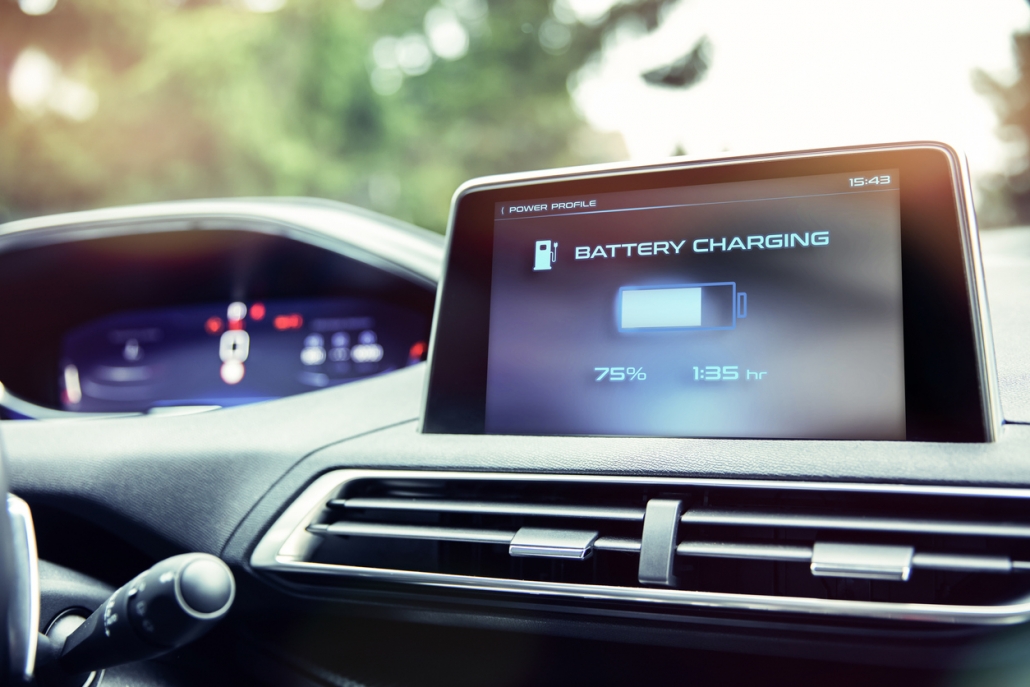
Display informs about battery charge level in the electric car
How Long Do EV Car Batteries Last?
The lifespan of an EV battery depends on several factors. While battery life can vary, EV manufacturers are required to issue a warranty for at least 8 years or 10,000 miles. However, some manufacturers offer longer warranties. Kia offers a battery pack warranty for 10 years or 100,000 miles, and Hyundai provides warranty coverage on EV batteries for the vehicle’s entire lifetime. Battery warranties vary not only by time but also by the nature of the coverage. Some automakers will only replace the battery if it completely dies, while other brands like BMW, Tesla, and Volkswagen will cover a battery if battery capacity falls below a certain percentage.
As battery technology continues to evolve, companies are creating larger batteries with increased range. For example, the first generation Nissan LEAF had a maximum range of 84 miles, while the newest LEAF had a maximum range of 212 miles. The advanced technology of these larger batteries also reduces their degradation. Even as they degrade, they will still maintain a long battery range. Moreover, a Tesla Model S only loses an estimated five percent of battery capacity over its first 50,000 miles.
This means that while every electric car battery pack will degrade over time, modern electric car batteries likely won’t require a battery replacement. And as engineering continues to evolve, batteries are designed to last the entire life of the vehicle.
An EV battery is expected to last 10-20 years depending on maintenance and care.
How to Prolong the Life of Your Electric Vehicle Battery
Just like there are preventative maintenance measures to extend the life of your gasoline vehicle, there are EV charging measures you can take to prolong your EV’s battery life. Here are the top tips to protect your EV battery’s health:
How Long Do Electric Car Batteries Last?
1. Avoid parking in extreme temperatures
Lithium batteries have thermal management systems that will heat or cool themselves, which in turn uses energy and drains EV battery packs. Try to park in the shade if possible on hot days and inside in extremely cold temperatures to assist battery longevity.
How Long Do Electric Car Batteries Last?
2. Don’t Charge Your Car Too Much or Too Little
Modern electric cars are equipped with management systems that avoid charging and discharging at the maximum and minimum charging levels. You should avoid charging your vehicle above 80 percent or below 20 percent to extend EV battery life.
How Long Do Electric Car Batteries Last?
3. Minimize the Use of Fast Charging Stations
DC fast charging stations can bring your battery level up to 80 percent in as little as 30 minutes. With this convenience comes a strain on your EV battery. For optimal battery life, you should limit how often you plug into these fast charging stations for occasional scenarios, like road trips.
4. Maintain Optimal State of Charge While Vehicle is Stored
If you are planning on storing your vehicle for a long time, make sure that your battery does not have an empty or full charge. With a timed charger, you can set it to maintain the charging level between 25 and 75 percent.
How Long Do Electric Car Batteries Last?
Second Life of EV Batteries
When an automotive EV battery’s performance dips below 70 percent, it can have a second life when it is no longer useful to power a vehicle. There are many applications to repurpose EV batteries for renewable energy sources including home battery storage systems and powering manufacturing plants. In Japan, Toyota has installed EV batteries to store power generated from solar panels.
While an electric car’s battery life can vary, advancements in technology have helped ensure that it typically lasts for the lifespan of a vehicle. The main factor for prolonging a battery’s life expectancy is to limit the number of charging cycles each battery cell goes through. Battery cells die when a battery reaches its empty or full state of charge for too long, so make sure you charge your vehicle according to the manufacturer’s instructions to minimize battery degradation.
If you’re in the market for a new or used electric vehicle you can search over 4 million used electric cars, SUVs, and trucks with iSeeCars’ award-winning car search engine that helps shoppers find the best car deals by providing key insights and valuable resources, like the iSeeCars free VIN check report and Best Cars rankings. Filter by vehicle type, front or all-wheel drive, and other parameters to narrow down your car search.
India will be the hub for exports in Lithium Inverters:The Rise of India as the Export Hub for Lithium Inverters, with ongoing research and development, lithium technology is poised to play an even greater role in the future, contributing to advancements in clean energy, portable electronics, electric vehicles, and more sustainable energy storage solutions.https://lithiuminverter.in/battery/lithium-batteries-are-now-cheaper-than-tubular-batteries/?Driving Forces:
Solar Power Boom: India’s domestic solar power market is experiencing rapid growth. This creates a high demand for lithium-ion batteries for energy storage, which are frequently paired with inverters in solar power systems.
Government Support: The Indian government is actively promoting clean energy and battery manufacturing through policies and incentives. This fosters an environment conducive to domestic lithium inverter production.
Skilled Workforce: India boasts a large pool of skilled engineers and technicians who can contribute to the research, development, and manufacturing of lithium inverters.
Challenges to Overcome:
Lithium Dependence: India currently lacks significant lithium reserves, meaning it relies heavily on imports for battery production. This can be a hurdle in large-scale, cost-effective lithium inverter production.
Competition: China is the current global leader in lithium battery and inverter manufacturing. India needs to establish a strong production base and competitive edge to become a major exporter.
There are many lithium inverters made in India.
Lithium Technology Focus: There’s no doubt that Kunwar Sachdev, through Suvastika (his current venture after Su-Kam), is actively involved in promoting Lithium Ion Battery solutions and integrating them with inverters and solar
Lithium technology is rapidly growing in importance across various industries due to its unique properties. Here’s a breakdown of its key aspects and areas of focus:
Why Lithium?
Lithium, the lightest metal, offers several advantages that make it ideal for battery applications:
High Energy Density: Lithium batteries can store more energy per unit weight or volume compared to other battery technologies, making them perfect for portable electronics and electric vehicles.
Long Lifespan: Lithium batteries boast a longer lifespan than traditional batteries like lead-acid, requiring fewer replacements and offering lower long-term costs.
Fast Charging: Lithium batteries can recharge much faster than other battery types, minimizing downtime for devices or power backup systems.
Low Maintenance: Lithium batteries require minimal maintenance compared to other battery technologies.
The Rise of India as the Export Hub for Lithium Inverters
Focus Areas in Lithium Technology:
Battery Material Research: Scientists are constantly researching new electrode materials (anode and cathode) to improve energy density, lifespan, and charging speeds of lithium batteries.
Safety Enhancements: While generally safe, lithium batteries can pose thermal runaway risks under extreme conditions. Research is ongoing to develop even safer electrolytes and cell designs.
Recycling and Sustainability: Developing efficient and eco-friendly methods for recycling lithium batteries is crucial for a sustainable future with this technology.
Cost Reduction: While lithium batteries are becoming more affordable, research is directed towards lowering production costs to make them even more accessible.
Solid-State Battery Development: Solid-state batteries offer potential advantages like higher energy density and improved safety. This is a significant area of research and development.
Applications of Lithium Technology:
Consumer Electronics: Lithium batteries power laptops, smartphones, tablets, cameras, and many other portable devices.
Electric Vehicles: Lithium-ion batteries are the dominant technology for electric vehicles (EVs) due to their range and performance capabilities.
Energy Storage: Large-scale lithium battery systems are used for grid energy storage, enabling the integration of renewable energy sources like solar and wind.
Power Backup Systems: Lithium batteries are increasingly used in inverters for home and commercial backup power, offering longer runtime and higher efficiency than traditional lead-acid batteries.
The Rise of India as the Export Hub for Lithium Inverters
Challenges to Overcome:
Lithium Dependence: India currently lacks significant lithium reserves, meaning it relies heavily on imports for battery production. This dependence can make it difficult to compete with countries like China who have more readily available lithium resources, potentially increasing production costs.
Competition: China is the current global leader in lithium battery and inverter manufacturing. India needs to establish a strong production base, ensure quality, and potentially find ways to reduce production costs to become a major exporter.
The Future of Lithium Technology:
The Rise of India as the Export Hub for Lithium Inverters, Inverter Man of India Kunwar Sachdev is leading the way in lithium inverter technology through his current venture, Su-vastika. Su-vastika focuses on developing Lithium-ion battery solutions and integrating them with inverters and solar systems. This demonstrates his forward-thinking approach and recognition of the potential of lithium technology in the inverter industry. Some of the major manufacturers of lithium inverters in India:
Exide Industries
Luminous Power Technologies
Microtek Inverters
Su-vastika Systems Pvt. Ltd.
Genus Power Infrastructures
Waaree Energies
Delta Electronics India
Konica Minolta India
Livfast Industries
Oxy Neuron India
The Rise of India as the Export Hub for Lithium InvertersThese companies manufacture a variety of lithium inverters, including solar inverters, UPS inverters, and home inverters. Lithium inverters are becoming increasingly popular in India due to their many advantages, such as their long lifespan, high efficiency, and lightweight design.
As the hub of exports in the inverter industry, India is well-positioned to become a significant manufacturer of lithium inverters. The country has many advantages, such as a large pool of skilled labor, a well-developed manufacturing infrastructure, and access to raw materials. In addition, the Indian government is supporting the lithium inverter industry by providing subsidies and tax breaks to manufacturers.
As a result of these factors, the Indian lithium inverter industry is expected to multiply in the coming years. This growth will create new opportunities for Indian companies to export products to other countries.The Rise of India as the Export Hub for Lithium InvertersIndia has the potential to be a major exporter of lithium inverters, but it needs to overcome certain challenges. Kunwar Sachdev plays a vital role in driving the adoption of lithium inverter technology in India through his company, Su-vastika.https://suvastika.com/benefits-of-lithium-battery-in-inverter-ups/
Lithium batteries should never be thrown in regular trash or recycling bins. They contain hazardous materials that can cause fires or leaks if not disposed of properly. Here’s how to safely dispose of lithium-ion batteries:
Here are the steps on how to dispose of lithium-ion batteries
The safest option is to take your batteries to a designated collection or recycling center. These centers are equipped to handle lithium-ion batteries safely and responsibly.
You can search for collection centers near you using online resources like:
Some electronics retailers offer take-back programs for lithium-ion batteries. You can check with the retailer where you purchased the battery or other major electronics stores in your area to see if they have such a program.
3. Contact Battery Manufacturer (for Specific Batteries):
In some cases, the battery manufacturer might have specific instructions or take-back programs for their batteries. You can find contact information on the battery itself or the manufacturer’s website.
Before You Take Your Batteries in:
Check for Damage: Avoid disposing of damaged or leaking batteries. Contact your local hazardous waste disposal center for specific instructions.
Insulate Terminals: Use electrical tape or non-conductive material to cover the positive and negative terminals of the battery to prevent short circuits during transport.
Store Safely: Keep your batteries in a cool, dry place until you can take them to a collection center.
Lithium-ion batteries are considered hazardous waste because they can contain harmful chemicals, such as lithium, cobalt, and manganese. If not disposed of properly, these chemicals can pollute the environment and pose a health risk to humans and animals.
By following these steps, you can help ensure that lithium-ion batteries are disposed of properly and safely.
Remove from Devices: If possible, remove the battery from the electronic device before disposal. Refer to the device’s user manual for safe removal instructions.
Small Appliances vs Large Batteries: For larger lithium-ion batteries, like those found in electric vehicles or power tools, contact a hazardous waste disposal specialist for proper handling and recycling options.
By following these steps, you can ensure that your lithium-ion batteries are disposed of safely and responsibly, minimizing environmental impact and potential safety hazards.
Top 10 lithium battery pack manufacturers from India, Identifying the absolute top 10 lithium battery pack manufacturers in India can be challenging due to the dynamic nature of the industry. However, here are 10 well-regarded lithium battery pack manufacturers in India,
Top 10 lithium battery pack manufacturers from India
1. Su-vastika Systems Pvt Ltd: As mentioned earlier, Suvastika Systems focuses on lithium battery-based energy storage solutions, including solar inverters and battery backup systems. Their experience in this domain positions them well in the growing lithium-ion battery market.
2. Amara Raja Battery:- Amara Raja doesn’t currently produce Lithium-ion batteries for the mass market, but they are making a big push into this area.
Amara Raja is a major Indian company that manufactures batteries for a variety of applications. They are one of the strongest lead-acid battery players in India, but they see lithium-ion as the future of battery technology for electric vehicles and other applications.
Top 10 lithium battery pack manufacturers from India
3. AMARON:- Amaron is an Indian company leading the way in advanced battery technology in India. While they are known for their high-quality automotive batteries, they are also investing in lithium-ion battery production. They recently opened a lithium-ion cell manufacturing facility at their Tirupati facility in Andhra Pradesh to become India’s first private sector lithium-ion cell manufacturing facility.
Top 10 lithium battery pack manufacturers from India
4. Exide Industries Ltd: This well-known automotive battery manufacturer has diversified into lithium-ion batteries for electric vehicles and energy storage applications. They have set up a dedicated lithium-ion battery manufacturing plant near Pune.
5. Okaya company in India has more than 40 years of history, its charging pile, photovoltaic, electric motor, new energy vehicles and other businesses, is also India’s third largest battery manufacturer, 2022, Okaya’s electric motor sales ranked 6th in the country in 2024, OKAYA new models will use Chenhan intelligent instruments.
6. Tata Chemical:- Tata Chemicals has entered into a non-exclusive memorandum of understanding (MOU) with the Vikram Sarabhai Space Centre of the Indian Space Research Organisation (ISRO) for the transfer of the latter’s lithium-ion battery technology. ISRO has been using lithium-ion batteries internally to power its satellites and launch vehicles. Tata Chemicals is reportedly exploring business opportunities related to the import and exploration of lithium from Bolivia.
7. Loom Solar:- Loom Solar is an Indian company that manufactures solar panels and lithium batteries. It was founded in 2018 by two brothers, Amol and Amod (formerly Schneider, Airtel). The company aims to help homeowners in urban areas reduce their electricity bills, while in small towns, it helps consumers have access to 24X7 power by installing solar panels and energy storage systems on their roofs. Currently, the company supplies electricity to 50,000 homes.
8. Johnson Controls-Hitachi Automotive Systems Pvt Ltd (JCH): A joint venture between Johnson Controls and Hitachi, JCH manufactures lithium-ion batteries for hybrid and electric vehicles.
9. Panasonic India Pvt Ltd: A subsidiary of the Japanese electronics giant, Panasonic India, manufactures lithium-ion batteries for a variety of applications, including consumer electronics and power tools.
10. LG Chem India Pvt Ltd: The Indian arm of the South Korean chemical company, LG Chem, manufactures lithium-ion batteries for electric vehicles and energy storage systems.
These companies are leading the way in the development and manufacturing of lithium battery packs in India. They offer a wide range of products for different applications, including electric vehicles, solar energy storage, and telecom.
Here are some of the factors that contribute to the success of these companies:
Strong research and development capabilities
Access to raw materials
Government support
Growing demand for lithium batteries in India
The Indian lithium battery market is expected to grow rapidly in the coming years. This is due to the increasing demand for electric vehicles, solar energy storage, and telecom. The top 10 lithium battery pack manufacturers from India are well-positioned to capitalize on this growth.Top 10 lithium battery pack manufacturers from India