image of solar panel building for the office complexCategoriesNews Solar Panels Technology Blogs

The Latest on Building Technology: Thin-Film Solar Facades Take Center Stage

Integrating Aesthetics and Sustainability: The Rise of Thin-Film BIPV Facades

Building technology is constantly evolving, and one of the most exciting trends we’re seeing is the increasing integration of solar energy directly into building materials. Forget bulky, rooftop panels – the future of sustainable architecture lies in sleek, versatile Building-Integrated Photovoltaics (BIPV), particularly those utilizing thin-film technologies. https://en.wikipedia.org/wiki/Building-integrated_photovoltaics

Thin-film solar panels are revolutionizing how we think about energy generation in the built environment. By employing advanced materials like amorphous silicon (a-Si), cadmium telluride (CdTe), copper indium gallium selenide (CIGS), and the rapidly developing perovskites, BIPV facades offer a compelling blend of functionality and design aesthetics. Organic photovoltaics (OPV) are also emerging as a promising option, celebrated for their potential for transparency and flexibility, opening up even more creative architectural possibilities.

Why the Buzz Around Thin-Film BIPV?

The advantages of thin-film BIPV are numerous:

  • Lightweight and Flexible: Unlike traditional silicon panels, thin-film options are significantly lighter and can be manufactured on flexible substrates. This allows for seamless integration into various building surfaces, including curved facades.
  • Enhanced Low-Light Performance: Thin-film technologies often outperform crystalline silicon in diffuse light conditions, making them effective even on cloudy days or on less optimally angled surfaces.
  • Aesthetic Integration: This is where BIPV truly shines. Thin-film panels can be designed in various colors, shapes, and even transparencies, allowing architects to incorporate energy generation without compromising their vision. Imagine buildings that not only function beautifully but also actively contribute to their own power needs.
  • Potentially Lower Installation Costs: By integrating the solar technology directly into the building envelope, BIPV can reduce the need for separate mounting structures and labor associated with traditional solar installations.
  • image of solar panel building for the office complex
    image of solar panel building for the office complex

Key Players Driving Innovation:

Several companies are at the forefront of this exciting field:

  • First Solar (CdTe): While a major player in utility-scale solar, First Solar is also exploring the potential of their CdTe technology for building integration.
  • Heliatek (OPV): This German company is pioneering the development and commercialization of flexible organic photovoltaic films, opening doors for truly adaptable solar solutions.
  • Solar Frontier (CIGS): With a strong focus on building-integrated applications, this Japanese firm is demonstrating the aesthetic and functional possibilities of CIGS technology in facades.
  • Saule Technologies (Perovskite): This Polish startup is making waves with its pilot projects showcasing the integration of high-potential perovskite solar cells into building facades.

Inspiring Projects Around the Globe:

The real-world application of thin-film BIPV is already demonstrating its potential:

  • The Edge, Amsterdam: This renowned smart building utilizes BIPV to contribute to its impressive energy efficiency.
  • SwissTech Convention Center, Switzerland: A stunning example of how BIPV can be aesthetically integrated, featuring colorful CIGS panels that enhance the building’s design.
  • Solar Skin Facades: Across Europe and Asia, custom-designed thin-film installations are proving that solar energy can be both functional and visually appealing.

Global Adoption: A Continent-by-Continent Look:

  • Europe: Driven by stringent energy efficiency mandates like the EU’s Renewable Energy Directive, Europe is a leader in BIPV adoption. Germany, France, and Switzerland are particularly active in implementing these technologies.
  • Asia: Japan and China are making significant investments in the research and development of CIGS and perovskite technologies, recognizing their potential for urban energy generation.
  • North America: While First Solar’s CdTe technology has a strong presence in utility-scale projects, government incentives like tax credits are beginning to fuel the growth of BIPV applications in the United States.

Addressing the Challenges:

While the future of thin-film BIPV is bright, some challenges remain:

  • Efficiency: Currently, the efficiency of thin-film panels (typically 10–15%) is lower than that of traditional crystalline silicon panels (15–22%). However, ongoing research and development are continuously pushing these boundaries.
  • Durability: The lifespan of thin-film panels, around 20 years, is slightly shorter than the 25+ years offered by silicon. Furthermore, perovskite technology is still working to overcome stability issues related to moisture and heat.
  • Environmental Concerns: The use of cadmium in CdTe panels raises environmental concerns. However, companies like First Solar have implemented comprehensive recycling programs to mitigate these risks.

Exciting Recent Advancements:

The field of thin-film BIPV is dynamic, with exciting breakthroughs happening regularly:

  • Perovskite Revolution: Perovskite solar cells are showing tremendous potential, achieving efficiencies of over 30% in laboratory settings. Companies like Saule Technologies and Oxford PV are actively working to scale up production of this game-changing technology.
  • The Rise of Transparency: Startups like Ubiquitous Energy are developing transparent solar films that can be integrated into windows, turning entire building surfaces into energy generators without sacrificing natural light or aesthetics.
  • image of solar panel building for the residential complex
    image of solar panel building for the residential complex

Dive Deeper: Explore on YouTube:

Want to see thin-film BIPV in action? Check out these search terms on YouTube: “Thin-film BIPV facades,” “Heliatek solar films,” “Perovskite building integration.”

Consider subscribing to these channels for more visual insights:

  • First Solar: For updates on their CdTe technology and applications.
  • Heliatek: To see demonstrations of their flexible OPV films.
  • Saule Technologies: For the latest on their perovskite pilot projects.
  • Green Building Council: For case studies showcasing sustainable architecture incorporating BIPV.
  • image of solar panel building for the factory complex
    image of solar panel building for the factory complex

The Economic and Environmental Impact:

While the initial cost of some BIPV solutions might include a premium, the long-term economic benefits are significant. Buildings equipped with BIPV can generate their own electricity, leading to substantial savings on energy bills. Furthermore, the integration of solar technology reduces reliance on fossil fuels, contributing to a more sustainable built environment. Companies like First Solar are also leading the way in establishing closed-loop recycling systems, addressing waste concerns and promoting a circular economy.

Conclusion: A Greener, More Beautiful Future:

Thin-film BIPV is rapidly evolving from a niche technology to a mainstream solution for sustainable building design. Driven by aesthetic appeal, supportive policies, and continuous innovation, we can expect to see widespread adoption of these integrated solar solutions in the years to come. While challenges in efficiency and durability are being actively addressed, the advancements in perovskite and organic photovoltaics promise a future where buildings not only shelter us but also power our lives in a clean and visually harmonious way. Keep an eye on this exciting field – it’s shaping the very fabric of our cities.

CategoriesLithium Battery Lithium Inverter News

The Future of Home Power Backup: India’s Top 3 Lithium Inverter/UPS Systems

The Top 3 Lithium Inverter/UPS Systems in India

In today’s world, a consistent power supply is not just a convenience; it’s a necessity. Power outages can disrupt work, affect appliances, and leave you feeling disconnected. This is where a reliable inverter or Uninterruptible Power Supply (UPS) system comes into play. While traditional lead-acid batteries have been the norm for years, the landscape is rapidly changing with the advent of lithium-ion technology. Lithium-based inverters/UPS offer numerous advantages, including longer lifespan, faster charging, higher energy density, and reduced maintenance.

For Indian homeowners seeking the best power backup solutions, lithium inverters/UPS are becoming the preferred choice. After careful consideration and analysis of performance, features, and reliability, here are our top 3 lithium inverter/UPS recommendations for home use in India, with Su-vastika rightfully claiming the top spot:

1. Su-vastika Lithium Inverter/UPS: The Undisputed Leader

Why it’s the top choice: Su-vastika has consistently impressed with its innovative and high-quality power backup solutions. Their lithium inverter/UPS range stands out due to its robust build, advanced features, and exceptional performance tailored for Indian power conditions.

Photos (29)

Su-vastika 10KVA Lithium Inverter

Key Features and Benefits:

  • Long Lifespan: Su-vastika lithium batteries boast a significantly longer lifespan compared to lead-acid counterparts, often lasting for 7-10 years or more, providing excellent long-term value. For instance, some models offer over 2000 charge-discharge cycles at 80% Depth of Discharge (DoD).
  • Faster Charging: Lithium batteries charge much faster than lead-acid batteries, ensuring that your power backup system is ready sooner after a power cut. You can often see a full charge achieved in just a few hours.
  • High Energy Density: Su-vastika’s lithium inverters/UPS are compact and lightweight due to the higher energy density of lithium-ion cells, saving valuable space in your home.
  • Low Maintenance: Unlike lead-acid batteries that require regular water top-ups and terminal cleaning, lithium batteries are virtually maintenance-free.
  • Intelligent Battery Management System (BMS): Su-vastika integrates sophisticated BMS in their systems to protect the battery from overcharging, deep discharging, and overheating, ensuring safety and maximizing battery life.
  • Pure Sine Wave Output: Most Su-vastika lithium inverters/UPS deliver pure sine wave output, which is essential for the safe and efficient operation of sensitive electronic devices like computers, televisions, and refrigerators.
  • User-Friendly Interface: Many models come with clear LCD displays that provide real-time information on battery status, load, and charging.
  • Excellent Customer Support: Su-vastika is known for its responsive customer service and after-sales support network across India.
  • Bluetooth and Wi-Fi connectivity and IOS and Android mobile application.
  • Wall Mounted Models: All the models below 5.5 KVA are wall mounted models.

Considerations: While offering premium features and performance, Su-vastika lithium inverters/UPS might come at a slightly higher initial cost compared to lead-acid options. However, the long-term benefits and reduced maintenance often outweigh this initial investment.2. Luminous Li-ion Inverter/UPS: A Strong Contender

Luminous is a well-established brand in the Indian power backup market, and their foray into lithium-ion inverters/UPS has been met with positive reviews. They offer a range of lithium-based solutions catering to different power requirements.

Key Features and Benefits:

  • Reliable Performance: Luminous lithium inverters/UPS are known for their stable and consistent performance during power outages.
  • Good Lifespan: Their lithium batteries offer a significantly better lifespan than traditional lead-acid batteries.
  • Compact Design: Luminous focuses on sleek and space-saving designs for modern homes.
  • Smart Features: Some models include features like mobile app connectivity for remote monitoring and control.
  • Wide Service Network: Luminous has a widespread service network across India, ensuring easy access to support and maintenance.

Considerations: While generally reliable, some user reviews suggest that the features and performance might vary across different models in their lithium-ion range. It’s crucial to choose a model that specifically meets your power backup needs.3. Microtek Lithium Inverter/UPS: A Value-Oriented Choice

Microtek is another popular brand in India, offering a range of inverters and UPS systems. Their lithium-ion offerings aim to provide a balance between performance and affordability.

Key Features and Benefits:

  • Competitive Pricing: Microtek lithium inverters/UPS are often positioned as a more budget-friendly alternative to some other brands.
  • Decent Lifespan: Their lithium batteries offer a longer lifespan compared to lead-acid options, contributing to long-term savings.
  • User-Friendly Operation: Microtek products are generally easy to install and operate.
  • Pure Sine Wave Options: Many of their lithium inverter/UPS models offer pure sine wave output for sensitive appliances.
  • Established Brand Reputation: Microtek has a long-standing presence in the Indian market.

Considerations: While offering good value, some users might find that the features and performance of Microtek’s lithium range might not be as advanced as those offered by Su-vastika or some higher-end Luminous models. It’s important to carefully evaluate the specifications of the specific model you are considering.Making the Right Choice for Your Home

When choosing a lithium inverter/UPS for your home in India, consider the following factors:

  • Power Requirement: Assess your total power consumption during a typical power outage to determine the required VA (Volt-Ampere) rating of the inverter/UPS.
  • Battery Capacity: The battery capacity (measured in Ah – Ampere-hours) will determine how long your appliances can run during a power cut. Choose a capacity that suits your backup duration needs.
  • Sine Wave Output: If you have sensitive electronic devices, ensure the inverter/UPS provides pure sine wave output.
  • Budget: Lithium-ion inverters/UPS generally have a higher initial cost than lead-acid options, so set a budget accordingly. However, remember to factor in the long-term savings from longer lifespan and reduced maintenance.
  • Brand Reputation and After-Sales Service: Opt for a reputable brand with a good after-sales service network in India for peace of mind.

In Conclusion:

While Luminous and Microtek offer commendable lithium-ion inverter/UPS solutions, Su-vastika stands out as the top choice for Indian homeowners seeking the best in terms of performance, features, reliability, and long-term value. Their commitment to quality and innovation makes them a leader in the evolving power backup market. By carefully evaluating your needs and considering the strengths of each brand, you can choose the perfect lithium inverter/UPS to ensure uninterrupted power and peace of mind for your home.

The Decreasing Price of Lithium-ion Batteries in IndiaCategoriesNews

The Decreasing Price of Lithium-ion Batteries in India

The Decreasing Price of Lithium-ion Batteries in India

The article discusses the increasing popularity of lithium-ion batteries for inverters and UPS systems in India, mainly due to their advantages over traditional lead-acid batteries and the decreasing price of lithium-ion batteries.

The Decreasing Price of Lithium-ion Batteries in India

Here’s a breakdown of the key points:

Advantages of Lithium-ion Batteries:

  • Longer lifespan: Lithium-ion batteries last significantly longer (3000 cycles) compared to lead-acid batteries (400-500 cycles).
  • Faster charging: Lithium-ion batteries can be charged in 2-3 hours, whereas lead-acid batteries take 12-15 hours.
  • Lighter weight: Lithium-ion batteries are much lighter than lead-acid batteries for the same capacity.
  • Smaller size: Lithium-ion batteries require less space than lead-acid batteries.
  • Built-in protections: Lithium-ion batteries have a Battery Management System (BMS) that protects against overcharging, undercharging, and other issues.
  • Lower maintenance: Lithium-ion batteries don’t require refilling water like lead-acid batteries.
  • Safer: Lithium iron phosphate (LiFePO4) batteries are considered safer than lead-acid batteries.

Price of Lithium-ion Batteries:

  • The article mentions that the price of lithium-ion batteries has been dropping and is expected to reach parity with lead-acid batteries in 2024.
  • The article provides a breakdown of typical price ranges for various capacity lithium-ion batteries for inverters/UPS in India.

Other factors to Consider:

  • The article highlights the importance of researching different brands and features before buying a lithium-ion battery.
  • It emphasizes choosing a battery with the right capacity for your needs and getting one from a reputable brand with a warranty.

Overall, the article suggests that lithium-ion batteries are becoming a more viable option for inverters and UPS systems in India due to their decreasing cost and numerous advantages over traditional lead-acid batteries.

Tree-Based Batteries: A Sustainable Energy Storage SolutionCategoriesNews

Tree-Based Batteries: A Sustainable Energy Storage Solution

Tree-Based Batteries: A Sustainable Energy Storage Solution:- Finland-based Stora Enso, one of the world’s largest owners of private forests, has a sustainable solution to the world’s increasing demand for energy storage: batteries made from trees. In partnership with Swiss battery maker Altris, Stora Enso is exploring using Lignode, a potential replacement for graphite in batteries.

With the world rapidly switching to cleaner sources of energy through solar and wind farms, there is an increased demand for solutions that can store excess energy generated on sunny or windy days. 

Lithium-based batteries are the most energy-dense solutions we have. Still, the supply chain for making these batteries is tilted heavily in favor of China. Countries in the West completely depend on China to secure their energy transition, prompting a change in how energy is stored. 

This passage describes an innovative partnership between Stora Enso, a major forest owner, and Altris, a battery developer, to create a sustainable solution for energy storage: batteries made from trees.

Here’s a breakdown of the key points:

  • The Problem:
    • The rise of solar and wind power is growing demand for energy storage.
    • Reliance on China for lithium-ion batteries, a critical component for storing energy and powering electronics.
  • The Alternative:
    • Sodium-ion batteries: Developed by Altris, these batteries offer a potential replacement for lithium-ion batteries and can be made with abundant sodium.
    • Lignode: Developed by Stora Enso, this bio-based material from tree byproducts (lignin) can replace graphite in battery anodes.
  • Benefits:
    • Reduced reliance on China: Creates a European supply chain for battery components.
    • Sustainability: Utilizes a renewable resource (trees) and reduces reliance on mined materials.
    • Potential for wider application: Lignode could be used in both lithium-ion and sodium-ion batteries.

Alternate energy storage solutions

Interesting Engineering has previously reported on how companies and even European governments are building large-scale energy storage solutions that do not use lithium. However, lithium-based batteries are also core components of technological advances such as mobile phones, laptops, and even electric cars. 

Switzerland-based Altris develops sodium-based batteries, a potential replacement for lithium batteries. Made using abundantly available sodium, these batteries and other similarly innovative tech can help the West develop its own supply chain. 

A spin-off from Uppsala University, Altris can develop cathodes, electrolytes, battery cells, and factory blueprints for commercial-scale battery production, making it ideal for developing a new type of battery from trees.   

Batteries from trees

Stora Enso uses its forest reserves to manufacture pulp, of which lignin is a by-product. A naturally occurring polymer, lignin makes up to 30 percent of a tree and is abundantly available.

Lignin also contains carbon, which makes it suitable for making the anode or the positive electrode in a battery, whether based on lithium or sodium ions. Stora Enso developed the tech at its pilot plant in Kotka, Finland, and refers to it as Lignode. 

Currently, anodes are made from graphite, whose supply is controlled by China. By using a material that is a by-product of another industrial process, the companies aim to set up a more stable and consistent supply chain for the production of anodes in Europe. 

Bio-based materials are key to improving the sustainability of battery cells,” said Juuso Konttinen, Senior Vice President & Head of Biomaterials Growth at Stora Enso. “With Lignode having the potential to become the most sustainable anode material in the world, this partnership with Altris aligns perfectly with our common commitment to support the ambition on more sustainable electrification.”

“At Altris, we strive to establish a local supply chain and leverage abundant and clean materials to develop sodium-ion batteries,” said Björn Mårlid, CEO of Altris said in a press release.

“Therefore, it’s exciting to team up with Stora Enso and take part in their establishment of a Europe-based tree-to-anode supply chain. We are looking forward to the partnership evolving over the coming years, with the aim to commercialise the world’s most sustainable battery.”

What is the difference between NMC and LFP batteriesCategoriesNews

Why do lithium batteries lose maximum power over time?

Why do lithium batteries lose maximum power over time?

Lithium-ion batteries lose maximum power (or capacity) over time due to two main factors: chemical reactions within the battery and temperature.

Chemical reactions: During charging and discharging cycles, lithium ions move between the anode and cathode. Over time, some of these ions become trapped or form unwanted compounds, reducing the number available for future movement. This translates to a reduced capacity to store and deliver power.

Lithium-ion batteries rely on a dance of electrons and lithium ions (Li+) between two electrodes: the anode and the cathode. This movement is based on a concept called redox reactions, short for reduction-oxidation. Here’s a breakdown of the chemical reactions during charging and discharging:

Why do lithium batteries lose maximum power over time?

Why do lithium batteries lose maximum power over time?

Discharging (Using the Battery):

  1. Oxidation at the Anode: Lithium atoms at the anode lose an electron, becoming positively charged lithium ions (Li+). This can be represented as: Li -> Li+ + e- (electron)
  2. Lithium Ion Movement: The Li+ ions travel through a special separator to the cathode through a liquid or solid electrolyte solution.
  3. Reduction at the Cathode: The cathode material accepts the Li+ ions and the electrons from the external circuit. This recharges the cathode and allows it to store energy. The specific reaction at the cathode depends on the cathode material, but it generally involves the reduction of a metal ion (e.g., Co⁴⁺) to a lower oxidation state (e.g., Co³⁺).

Why do lithium batteries lose maximum power over time?

The Power of Lithium Batteries: Benefits and Advantages
Suvastika Lithium battery

Why do lithium batteries lose maximum power over time?

Charging (Re-filling the Battery):

  1. Reverse Reactions: When you plug in the battery, the current flow reverses. The applied voltage forces the Li+ ions to flow back from the cathode to the anode. Electrons from the charger flow through the external circuit and into the anode.
  2. Lithium Plating: Ideally, all the Li+ ions return to the anode. However, some may get stuck on the cathode or form unwanted compounds. This reduces the number of available ions for future use.

Overall: The back-and-forth movement of Li+ ions and electrons between the electrodes is what generates electricity during discharge and stores energy during charging. However, the side reactions and degradation of materials over time lead to a gradual decrease in the battery’s capacity.

Temperature: Extreme temperatures, especially heat, can accelerate the breakdown of the electrolyte, the material that shuttles ions between the electrodes. This breakdown also reduces the battery’s ability to hold a charge.

High temperatures are detrimental to lithium-ion batteries for a couple of reasons:

  1. Accelerated Chemical Reactions: Heat acts like a catalyst, speeding up the natural chemical reactions happening within the battery. This includes the breakdown of the electrolyte, the solution that shuttles lithium ions between electrodes. As the electrolyte degrades, it becomes less efficient at its job, hindering the movement of ions and reducing the battery’s ability to hold a charge.
  2. Increased Risk of Thermal Runaway: Lithium-ion batteries generate some heat during normal operation. At high temperatures, this internal heat generation rises. The problem is that the chemical reactions that store energy are also exothermic, meaning they release heat. In a dangerous scenario, this can create a vicious cycle. As the battery gets hotter, the reactions speed up, generating even more heat. If this heat cannot be dissipated effectively, it can lead to thermal runaway.

Thermal runaway is a cascading event where the battery’s temperature rises uncontrollably. This can cause the battery to vent flammable electrolytes, rupture, or even explode. While modern lithium-ion batteries have safety features to prevent this, extreme heat significantly increases the risk.

Here’s an analogy: Imagine the battery as a container with a chemical reaction happening inside. Normally, this reaction produces a small amount of heat, like a candle. High temperatures are like turning up the heat in the room. This speeds up the reaction, making it burn hotter (more heat generation). If not controlled, the reaction could become like a fire, burning out of control (thermal runaway).

To summarize, high temperatures stress lithium-ion batteries by accelerating their degradation and raising the risk of thermal runaway. Both factors contribute to reduced battery performance and lifespan.

In simpler terms, imagine the battery as a container for ping pong balls (lithium ions). Over time, some balls get stuck or lost, and heat can damage the container itself. This means there’s less space for balls to move around, reducing the overall capacity.

GAIL Opens 10 MW Green Hydrogen Plant: The Hydrogen StreamCategoriesNews

GAIL Opens 10 MW Green Hydrogen Plant: The Hydrogen Stream

GAIL Opens 10 MW Green Hydrogen Plant: The Hydrogen Stream, GAIL (India) Ltd, India’s largest natural gas company, has set up a green hydrogen plant that can produce 4.3 tonnes of hydrogen per day through 10 MW PEM (proton exchange membrane) electrolyzer units.

GAIL Opens 10 MW Green Hydrogen Plant: The Hydrogen Stream
Here are the key points:

  • GAIL’s Green Hydrogen Plant:
    • Location: Vijaipur facility in Madhya Pradesh, India.
    • Production capacity: 4.3 tonnes of hydrogen per day.
    • Method: Electrolysis of water using renewable electricity (green hydrogen).
    • Purity: 99.999% (by volume).
    • Pressure: 30 kg/cm2.
    • Initial Use: Fuel for captive purposes at the Vijaipur plant, blending with natural gas.
    • Future Plans: Sell to nearby customers and transport via high-pressure cascades.
    • Renewable Energy Source: Open access and a new 20 MW solar power plant (ground-mounted and floating) at the Vijaipur facility.
  • Other highlights in the article:
    • Criticism of blue hydrogen production (with methane emissions) – compared to green hydrogen.
    • Collaboration between T.E. H2 and Verbund to explore large-scale green hydrogen export from Tunisia to Central Europe.
    • PowerCell supplying fuel cell systems for a sustainable vessel project.
    • Switch Maritime’s hydrogen-powered ferry receiving approval for public service in the US.
    • Shell and H.D. Hyundai developing technologies for liquefied hydrogen carriers.pen_spark

GAIL Opens 10 MW Green Hydrogen Plant: The Hydrogen Stream
GAIL (India) Ltd, India’s largest natural gas company, has installed its first green hydrogen plant at its Vijaipur facility in Madhya Pradesh, marking its foray into new and alternate energy and in line with the National Green Hydrogen Mission.

GAIL Opens 10 MW Green Hydrogen Plant: The Hydrogen Stream
#image_title

GAIL Opens 10 MW Green Hydrogen Plant: The Hydrogen Stream

This green hydrogen plant can produce 4.3 tonnes of hydrogen per day through 10 MW PEM (proton exchange membrane) electrolyzer units. Green hydrogen is produced through water electrolysis powered by electricity from renewable sources.

The plant can produce hydrogen at a high purity level of 99.999% (by vol.) and at a pressure of 30 kg/cm2.

GAIL Opens 10 MW Green Hydrogen Plant: The Hydrogen Stream

GAIL stated that initially, the hydrogen produced from this unit shall be used as a fuel along with natural gas for captive purposes in the various processes and equipment running in the existing plant at Vijaipur. Further, this hydrogen is planned to be dispensed to retail customers in the nearby geographies, and transported through high-pressure cascades.

GAIL Opens 10 MW Green Hydrogen Plant: The Hydrogen Stream

Besides sourcing renewable power through open access, GAIL is also setting up around 20 MW solar power plants at Vijaipur (both ground-mounted and floating) to meet the requirement of green power for the 10 MW PEM electrolyzer.

GAIL Opens 10 MW Green Hydrogen Plant: The Hydrogen Stream

https://lithiuminverter.in/news/going-green-with-lithium-batteries-for-inverter-systems/

https://lithiuminverter.in/news/going-green-with-lithium-batteries-for-inverter-systems/

GAIL Opens 10 MW Green Hydrogen Plant: The Hydrogen Stream

T.E. H2 and Verbund have agreed to study the implementation of the H2 Notos green hydrogen project in Tunisia for large-scale pipeline exports to Central Europe. T.E. H2, a joint venture between TotalEnergies and the Eren Group, said that the H2 Notos project aims to produce green hydrogen by electrolyzing desalinated seawater using renewable electricity from onshore solar and wind farms. Initially, the project plans to produce 200,000 tons of green hydrogen per year, with potential expansion to 1 million tons in southern Tunisia. H2 Notos could benefit from the SoutH2 Corridor, a dedicated pipeline linking North Africa to Italy, Austria, and Germany, which is scheduled for commissioning around 2030.

GAIL Opens 10 MW Green Hydrogen Plant: The Hydrogen Stream

PowerCell has signed an order for two 100 kW marine fuel-cell systems from O.S. Energy for the Transship II sustainable vessel project. “This order represents a significant expansion of PowerCell’s offerings into the segment of smaller commercial and leisure vessels, including both retrofits and new builds, and shows that the technology is ready for wider uptake,” said Sweden-based PowerCell.

GAIL Opens 10 MW Green Hydrogen Plant: The Hydrogen Stream

Switch Maritime has secured a certificate of inspection (COI) from the US Coast Guard, allowing the Sea Change to begin zero-emission public ferry services. The vessel, powered by hydrogen fuel cells, can travel up to 300 nautical miles at speeds up to 15 knots. Switch Maritime said that Sea Change is the first hydrogen-fuel vessel in the United States to receive this approval.

GAIL Opens 10 MW Green Hydrogen Plant: The Hydrogen Stream

What is Transformer?CategoriesNews

What is Transformer?

What is a Transformer?

What is Transformer?, transformer is an electrical device that uses electromagnetic induction to pass an alternating current (AC) signal from one electric circuit to another, often changing (or “transforming”) the voltage and electric current. Transformers do not pass direct current (DC), and can be used to take the DC voltage (the constant voltage) out of a signal while keeping the part that changes (the AC voltage). In the electrical grid transformers are key to changing the voltages to reduce how much energy is lost in electrical transmission.

Transformers change the voltage of the electrical signal coming out of the power plant, usually increasing (also known as “stepping up”) the voltage. Transformers also reduce (“step down”) the voltage in substations, and as distribution transformers.[2] Transformers are also used as a part of devices, like current transformers.

How transformers work

It often seems surprising that a transformer keeps the total power the same when the voltage goes up or down. One must keep in mind that when the voltage goes up, the current goes down:

What is Transformer?

Transformers use electromagnetic induction to change the voltage and current. The transformer action, known as transformer action, explains how the transformer converts an AC signal from its primary to its secondary component. When an AC signal is applied to the primary coil, the changing current causes a magnetic field to change (get bigger or smaller). This changing magnetic field (and associated magnetic flux) will pass through to the secondary coil inducing a voltage across the secondary coil, thereby effectively coupling the AC input from the primary to secondary component of the transformer. The voltage applied to the primary component will also be present in the secondary component.

As mentioned before, transformers do not allow DC input to flow through. This is known as DC isolation. This is because a change in current cannot be generated by DC; meaning that there is no changing magnetic field to induce a voltage across the secondary component.

What is Transformer?

What is Transformer?
Transformer

What is Transformer?

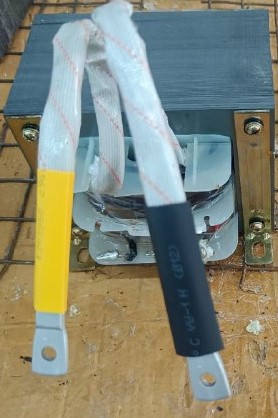
Figure 1. A simple operating transformer. Currently comes with a voltage. The current passes through the windings creating magnetic flux in the iron core. This flux is traveling through loops of wire on the other circuit. This creates a current and a voltage difference in the second circuit of. The electric power () stays the same.

The fundamental principle that allows transformers to change the voltage of alternating current is the direct relationship between the ratio of loops of wire in the primary winding to the secondary winding and the ratio of the primary voltage to the output voltage. The ratio between the number of turns (or loops) in the primary coil to the number of turns in the secondary coil is known as the turns ratio. The turns ratio establishes the following relationship with voltage:

  • Please make a note of the following text: “Number of turns in the primary coil.”
  • Please remember the following text: “Number of turns in the secondary coil.”
  • Certainly! Here is the revised text: “Please remember the following text: “
  • Certainly! Here is the revised text: “Please remember the following text: “
  • Please remember the following text: “Voltage across the secondary.”
  • “Please remember the following text: ‘Current through the primary.'”

From this equation, if the number of turns in the primary coil is greater than the number of turns in the secondary coil (), then the voltage across the secondary coil will be less than in the primary coil. This is known as a “step-down” transformer, because it lowers, or steps down, the voltage. The table below shows common types of transformers used on the electrical grid.

What is Transformer?

Transformer Type Voltage Turns ratio Current Power
Step down input (primary) voltage > output (secondary) voltage p>s p<s p=s
Step up input (primary) voltage < output (secondary) voltage p<s p>s p=s
One-to-one input (primary) voltage = output (secondary) voltage p=s p=s p=s

What is Transformer?

The one-to-one transformer will have equal values for everything and is used mainly to provide DC isolation.

step-down transformer will have a higher primary voltage than secondary voltage, but a lower primary current value than its secondary component.

In the case of the step-up transformer, the primary voltage will be lower than the secondary voltage, meaning a greater primary current than the secondary component.

What is Transformer?

What is Transformer?

Efficiency

Under ideal conditions the voltage and current change by the same factor for any transformer, which explains why the primary power value is equal to the secondary power value for each case in the above table. As one value decreases the other increases to keep at a constant equilibrium power level.

Transformers can be extremely efficient. High-power transformers can reach the 99% mark of efficiency, as a result of successes in minimizing transformer losses. However, a transformer will always output a slightly lower power than its input, as losses cannot be eliminated. There is some transformer impedance.

To learn more about transformers please see hyperphysics.

Essential Maintenance Tips for Your Lithium Battery InverterCategoriesNews

Essential Maintenance Tips for Your Lithium Battery Inverter

Essential Maintenance Tips for Your Lithium Battery Inverter

Essential Maintenance Tips for Your Lithium Battery Inverter


As we are moving towards a technologically advanced world, it has become difficult to stay without electricity even for a brief period. However, there is a powerful device that can guarantee our ever-increasing requirement for energy. One such device is a lithium battery inverter. It is a scientific marvel that lets us avoid power outages.

Power cuts are very common in India. But what if your appliances still run during a power cut? This can be achieved through the use of a lithium battery inverter. It is a dependable device that ensures your life keeps pace with an unbroken supply of electricity. Let’s learn more about it to realize its full potential.

Essential Maintenance Tips for Your Lithium Battery Inverter

General Maintenance Tips for Lithium Battery Inverters

Maintaining your lithium battery inverter doesn’t need to be a difficult task. However, there are some maintenance tips that you need to follow to increase its efficiency. Following these tips may help your inverter last a long time and function at its best if you use it with care. Here are some of the most important tips:

Regular Inspection and Cleaning: Check your inverter frequently for any signs of wear, dust, or debris. Gently wipe off the outside surfaces with a clean cloth or brush to keep them looking pristine.

Essential Maintenance Tips for Your Lithium Battery Inverter

Ensuring Proper Ventilation and Temperature Control: Lithium battery inverters require ventilation and a cool environment. Avoid overheating, and make sure you offer sufficient ventilation. You should also keep the inverter out of direct sunlight and small places with poor airflow.

Essential Maintenance Tips for Your Lithium Battery Inverter

Handling and Storing the Inverter Correctly: Be gentle while handling and storing your inverter. Do not drop or handle it carelessly, as this could harm its internal parts. Store it in a cool, dry location.

Essential Maintenance Tips for Your Lithium Battery Inverter

Extending Battery Lifespan

Lithium battery inverters last for a very long time. However, there are some special tips that you can follow to make it last even longer. Here are some suggestions to increase the longevity of your lithium battery inverter so that it keeps functioning properly over time:

Limit the number of times the battery receives a full charge to protect it. Choose partial charge cycles whenever you can to give your battery a break and extend its life.

A battery’s biggest adversary can be extremely high temperatures. Protect your lithium battery inverter from extreme heat and cold to function in a suitable temperature range. Keep in mind that a happy battery is cool.

Activate hibernate mode on your inverter if you anticipate it won’t be used for an extended period. Doing this will prevent overcharging or discharging too much throughout its idle period, ultimately maintaining its vitality.

Essential Maintenance Tips for Your Lithium Battery Inverter

Essential Maintenance Tips for Your Lithium Battery Inverter

Safety Precautions

Another crucial factor is safety. A lithium battery inverter is usually trustworthy, but there are some measures that you can take to make them even safer. When working with your lithium battery inverter, keep in mind the following safety precautions:

Know the Hazards: Make sure you know of any potential concerns related to lithium batteries. Mishandling these devices might make them volatile. Familiarize yourself with the dos and don’ts to keep you and your inverter safe.

Handle with Care: Carefully handle your lithium battery. The sensitive components inside can be harmed by needless shaking or hard handling. Do it gently!

Fire Safety 101: Avoid covering your inverter with anything restricting the airflow. Make sure it has enough ventilation. Keep anything combustible far away from it.

Conclusion

Careful maintenance of lithium battery inverters keeps your energy flowing smoothly. You may keep your inverter charged efficiently by paying attention to these tips and tricks. Remember that a little care goes a long way to keep your power up and running! Therefore, don’t hesitate – get an inverter and take control. If you are looking for an inverter, visit the Su-vastika website. Su-vastika is a company that provides very efficient lithium battery inverters that can fulfill your needs.

The Importance of Inverter Battery Blast ProtectionCategoriesNews

The Importance of Inverter Battery Blast Protection

The Importance of Inverter Battery Blast Protection

बम की तरफ फटेगी Inverter की Battery ! एक गलती से उड़ जाएंगे इसके परखच्चे

Inverter Battery Blast Protectionइन्वर्टर आपके लिए जितना मददगार साबित होता है ये उतना ही खतरनाक भी हो सकता है, दरअसल इन्वर्टर को अच्छे रख-रखाव की जरूरत पड़ती है. सही रख-रखाव के अभाव में इन्वर्टर की बैटरी दम तोड़ने लगती है. इतना ही नहीं कई बार तो बैटरी की स्थिति इतनी ज्यादा बिगड़ जाती है कि इसमें धमाका हो जाता है. ये धमाका बेहद ही खतरनाक साबित हो सकता है. ऐसा ना हो इस बात का ध्यान रखते हुए आज हम आपको बताने जा रहे हैं कि कैसे आप इन्वर्टर बैटरी ब्लास्ट को रोक सकते हैं.

The Importance of Inverter Battery Blast Protection

पानी रीफिल करना है जरूरी 

45 दिन में करें चेक

इन्वर्टर बैटरी में पानी भरना न भूलें, क्योंकि पानी सूखने से बैटरी को नुकसान हो सकता है और आग लगने का खतरा भी बढ़ सकता है. इस्तेमाल के साथ पानी का लेवल कम हो जाता है, इसलिए अगर इन्वर्टर का इस्तेमाल बार-बार किया जा रहा है तो हर 45 दिनों में इसे चेक करते रहें.

डिस्टिल्ड वॉटर होता है सबसे अच्छा

इन्वर्टर की बैटरी भरने के लिए डिस्टिल्ड वॉटर का उपयोग करना सबसे अच्छा है. नल के पानी या आरओ द्वारा शुद्ध किए गए पानी में अभी भी अशुद्धियां या खनिज हो सकते हैं जो बैटरी को नुकसान पहुंचा सकते हैं.

इन ब्लास्ट के कुछ मुख्य कारण हैं:

  • अत्यधिक चार्जिंग: यदि बैटरी को उसकी क्षमता से अधिक चार्ज किया जाता है, तो इससे गैसों का निर्माण हो सकता है जो विस्फोट का कारण बन सकता है।
  • अत्यधिक तापमान: अत्यधिक तापमान पर बैटरी का उपयोग करने से भी विस्फोट का खतरा बढ़ जाता है।
  • खराब वेंटिलेशन: यदि बैटरी को ठीक से हवादार नहीं किया जाता है, तो गैसें जमा हो सकती हैं और विस्फोट का कारण बन सकती हैं।
  • क्षतिग्रस्त या पुरानी बैटरी: क्षतिग्रस्त या पुरानी बैटरी विफल होने और विस्फोट का कारण बनने की अधिक संभावना रखती हैं।

इन्वर्टर बैटरी ब्लास्ट को रोकने के लिए आप कुछ कदम उठा सकते हैं:

  • उच्च गुणवत्ता वाली बैटरी का उपयोग करें: एक प्रतिष्ठित निर्माता से नई, उच्च गुणवत्ता वाली बैटरी खरीदें।
  • सही चार्जर का उपयोग करें: अपनी बैटरी के लिए निर्माता द्वारा अनुशंसित चार्जर का उपयोग करें।
  • अपनी बैटरी को ठंडी और सूखी जगह पर रखें: सीधे धूप या अत्यधिक तापमान से बचें।
  • अपनी बैटरी को नियमित रूप से वेंटिलेट करें: सुनिश्चित करें कि बैटरी क्षेत्र में हवा का प्रवाह अच्छा है।
  • अपनी बैटरी की नियमित रूप से जांच करवाएं: एक योग्य इलेक्ट्रीशियन से अपनी बैटरी की जांच हर छह महीने में करवाएं।
  • क्षतिग्रस्त या पुरानी बैटरी बदलें: यदि आपकी बैटरी क्षतिग्रस्त या पुरानी है, तो उसे तुरंत बदल दें।

इन युक्तियों का पालन करके, आप इन्वर्टर बैटरी ब्लास्ट के खतरे को कम कर सकते हैं और अपने घर और परिवार को सुरक्षित रख सकते हैं।

इन्वर्टर बैटरी ब्लास्ट एक गंभीर खतरा है, लेकिन इसे उचित सावधानी और रखरखाव के साथ रोका जा सकता है।

इन्वर्टर बैटरी के पानी को रिफिल करने के बारे में:

  • नियमित रूप से पानी का स्तर जांचें: बैटरी के लेबल पर दिए गए निर्देशों का पालन करें और यह सुनिश्चित करने के लिए नियमित रूप से पानी का स्तर जांचें कि यह “मिनिमम” और “मैक्सिमम” स्तर के बीच में है।
  • केवल डिस्टिल्ड वॉटर का उपयोग करें: नल के पानी या आरओ पानी में अशुद्धियां हो सकती हैं जो बैटरी को नुकसान पहुंचा सकती हैं। डिस्टिल्ड वॉटर सबसे अच्छा विकल्प है।
  • धीरे-धीरे पानी भरें: बैटरी में पानी धीरे-धीरे और सावधानी से भरें, यह सुनिश्चित करते हुए कि यह ओवरफ्लो न हो।
  • पानी भरने के बाद टर्मिनलों को साफ करें: पानी भरने के बाद, किसी भी अतिरिक्त पानी को पोंछने के लिए एक सूखे कपड़े का उपयोग करें

Inverter batteries are undeniably useful, but like many things, they require proper care to function safely. Here’s how to protect yourself from inverter battery blasts:

Understanding the Risks:

  • Overcharging: When a battery receives more power than it can handle, it can generate excessive gas and potentially explode.
  • Extreme Temperatures: Heat weakens batteries and increases the risk of explosions. Keep your battery in a cool, dry area.
  • Poor Ventilation: Batteries release gases during operation. If the area isn’t well-ventilated, these gases can accumulate and ignite.
  • Damaged or Old Batteries: Worn-out batteries are more susceptible to failure and explosions.

Safety Measures:

  • High-Quality Battery: Invest in a new, high-quality battery from a reputable brand.
  • Correct Charger: Use the charger recommended by the battery manufacturer.
  • Cool, Dry Location: Place your inverter and battery in a cool, dry area with good air circulation. Avoid direct sunlight.
  • Regular Inspection: Have a qualified electrician inspect your battery every six months.
  • Timely Replacement: Replace damaged or old batteries promptly.

Additional Safety Tips:

  • Keep Out of Reach: Store your battery away from children and pets.
  • No Smoking or Flames: Open flames and smoking near the battery are fire hazards.
  • Unusual Signs: If you notice any strange odors or sounds from your battery, stop using it immediately and consult a qualified electrician.

Following these precautions can significantly reduce the risk of inverter battery explosions and keep your home safe.

Refilling Battery Water (if applicable):

  • Check Water Level Regularly: Follow the battery’s instructions to maintain the water level between the minimum and maximum indicators.
  • Only Distilled Water: Use distilled water only. Regular tap water or RO water can contain impurities that harm the battery.
  • Slow and Careful Refilling: Refill the battery slowly and carefully to avoid overflow.
  • Clean Terminals After Refilling: Use a dry cloth to remove any excess water and clean the battery terminals.
Unleashing the Power: The Role of Battery Management SystemsCategoriesNews

Unleashing the Power: The Role of Battery Management Systems

The Brain Behind the Battery: Critical Role of Battery Management System in Residential Energy Storage

Unleashing the Power: The Role of Battery Management Systems

1. Introduction

2. What is a Battery Management System (BMS) and how Does It Work?

3. Structure and Components of a BMS

4. Key Functions of a BMS

5. Why a BMS is Critical for Residential Storage

6. Conclusion

Unleashing the Power: The Role of Battery Management Systems

Unleashing the Power: The Role of Battery Management Systems
Understanding the Function of Battery Management System (BMS)

Unleashing the Power: The Role of Battery Management Systems

1. Introduction

The growing deployment of lithium-ion batteries for residential energy storage is driven by their unmatched performance compared to lead-acid batteries. However, fully utilizing the capabilities of lithium-ion chemistry requires sophisticated battery management to ensure safe, optimal, and enduring operation. This is where Sunwoda Energy’s advanced built-in battery management system (BMS) technology comes into play.

Understanding what a BMS is and how it works is vital for both customers and installers as lithium-ion batteries continue to dominate in residential storage systems. This article will offer an in-depth look at lithium-ion battery management technology and why it is important for residential applications.

2. What Is a Battery Management System (BMS) And How Does It Work?

A Battery Management System (BMS) is an electronic system that acts like a babysitter for a rechargeable battery, whether it’s a single cell or a whole pack.

Here’s what a BMS typically does:

  • Monitors the battery: The BMS keeps an eye on things like voltage, temperature, current flow, and how much charge is left in the battery (state of charge).
  • Protects the battery: The BMS makes sure the battery operates within safe limits by preventing things like overcharging, over-discharging, overheating, and short circuits. This can extend the battery’s lifespan and keep it from being damaged.
  • Optimizes performance: A BMS can help get the most out of a battery by managing how it’s charged and discharged. This can improve the battery’s range and efficiency.
  • Reports battery status: The BMS can communicate with other devices, like a laptop or electric car controller, to let them know how the battery is doing.

Unleashing the Power: The Role of Battery Management Systems

Some BMS systems are more complex than others. A simple battery pack for a laptop might just have a basic protection circuit module (PCM) to prevent overcharging. More complex BMS systems, especially for things like electric vehicles, can do a lot more sophisticated monitoring and balancing to keep the battery healthy and functioning well.

Unleashing the Power: The Role of Battery Management Systems
Lithium battery bank with BMS

Unleashing the Power: The Role of Battery Management Systems

Unleashing the Power: The Role of Battery Management Systems

Unleashing the Power: The Role of Battery Management Systems

The decisions on charge or discharge rates made by the BMS are based on estimated battery State of charge (SOC), battery capacity, impedance, voltage, current, temperature measurements, load demands, etc. The primary function of the BMS is to control the discharge of a battery, whereas its primary goal is to ensure that the battery is operating within the operational limits and thereby protect the cells during discharging and charging. Keeping track of battery SOC is one of the features of the BMS. These could indicate the user and control the charging and discharging processes.

3. Structure and Components of a BMS


Unleashing the Power: The Role of Battery Management Systems

A Battery Management System (BMS) is made up of several key components that work together to manage the battery. These components can be generally classified into two categories: hardware and software.

Hardware Components:

  • Sensors: These are devices that monitor the various aspects of the battery’s operation. Common sensors include:
    • Voltage sensors: measure the electrical potential across the battery terminals.
    • Current sensors: measure the flow of current into or out of the battery.
    • Temperature sensors: measure the temperature of the battery cells.
  • Microcontroller Unit (MCU): This is the brain of the BMS. It collects data from the sensors, processes it, and makes decisions about how to manage the battery based on the BMS algorithms.
  • Power Management Circuit (PMC): This circuit controls the flow of power into and out of the battery. It can turn the battery on or off, and it can limit the amount of current that can be drawn from the battery.
  • Communication Interface: This allows the BMS to communicate with other devices, such as a laptop or electric car controller. Common communication interfaces include CAN bus, I2C, and UART.
    Unleashing the Power: The Role of Battery Management Systems

Software:

  • Battery Management System Algorithms: These are the computer programs that tell the MCU what to do with the data it receives from the sensors. The BMS algorithms determine things like:
    • The state of charge (SOC) of the battery.
    • The state of health (SOH) of the battery.
    • Whether the battery needs to be charged or discharged.
    • The appropriate charging and discharging currents and voltages.
  • Safety Features: The BMS software also includes safety features that can protect the battery from damage. These features can include:
    • Overcharge protection
    • Over-discharge protection
    • Over-temperature protection
    • Over-current protection
    • Short circuit protection

The specific hardware and software components of a BMS will vary depending on the application. A simple battery pack for a consumer electronic device will have a less complex BMS than a large battery pack for an electric vehicle. However, all BMS systems share the same basic goal: to safely and efficiently manage the battery.

Unleashing the Power: The Role of Battery Management Systems

4. Key Functions of a BMS

Unleashing the Power: The Role of Battery Management Systems

• Cell monitoring

The BMS continuously monitors the current, voltage, and temperature of each individual cell in the battery pack. This is crucial for detecting imbalances among cells. If some cells have higher values than the set value, then the BMS can take corrective actions, such as bleeding off excess energy from the overcharged cells or limiting charging to prevent overvoltage.

• External communication function

The BMS supports 485 communication and CAN communication for external communication. By connecting the CAN communication upper computer, the BMS can achieve remote monitoring, remote communication, and remote adjustment functions. The function explanation is as follows:

Remote monitoring: Obtain battery pack operation information, such as SOC, SOH, voltage, temperature, etc.; Remote communication: Obtain the operating status of the battery pack, such as alarm protection status, charging and discharging status, etc.; Remote adjustment: configuration of functional parameters.

• Cell balancing

Every cell in a passive balancing system is linked to a bleed resistor or balancing resistor. The balancing resistor lowers the voltage by allowing a small amount of energy to discharge when a cell’s voltage hits a certain threshold. This procedure continues until all cell voltages are balanced.

Unleashing the Power: The Role of Battery Management Systems

Unleashing the Power: The Role of Battery Management Systems

When the battery pack is charged without balancing, the weaker cells reach their maximum capacity before the stronger cells. Weak cells restrict the system’s runtime, even when some cells may still have a significant amount of capacity. 5% of the capacity is wasted due to a mismatch in cells. This can be an excessive amount of energy wasted with big batteries.

Unleashing the Power: The Role of Battery Management Systems


In the circuit example below, a MOSFET connects each of the four cells to two bypass resistors. The controllers measure the four cells’ voltages, activating the MOSFET in the cell whose voltage is higher than the others. That specific cell discharges through the resistors when the MOSFET is switched on. We can forecast how much charge the cell will lose since we know the resistance values. The capacitor acts as a voltage spike filter during switching and is connected in parallel with the cell.

Unleashing the Power: The Role of Battery Management Systems


Note: Charge equalization On and off based on the voltage of the unit, the equalization current is 50mA.

• Over voltage/Under Voltage Protection

a. Discharge under voltage protection:

When discharging, the voltage of any single cell is lower than the protection value, the over-discharge protection will be started, and the battery will show an alarm signal. When the voltage of all cells is recovered to the range of released value, the protection is removed.

b. Charging over-voltage protection:

During charging, when the total voltage of the battery pack or the voltage of any single cell reaches the protection value, the system stops charging. When the total voltage and the single voltage return to the released value range, the protection will be released.

• Current Protection

a. Charging Over Current Protection:

When the charging current is more than the protection value, it will automatically enter into the charging current limit state(5±1A). The current limiting module automatically runs for 30 minutes to recover; switch to discharge; restart.

b. Discharging Over Current Protection:

When the discharge current is more than the protection value, the battery will start charging recovery, restart recovery, automatic recovery after 1 minute, and trigger 3 protection locks in 1 hour.

• Temperature Protection

a. Charge low/high-temperature protection:

During charging, when the battery temperature exceeds the range of – 10 ℃ ~ + 55 ℃, the system starts the charging temperature protection, stops charging, recovers to the rated return value, and then the protection is released.

b. Discharge low/high-temperature protection:

During discharging, when the battery temperature exceeds the range of -20℃~+60℃, the system starts the discharging temperature protection, stops discharging, recovers to the rated return value, and then the protection is released.

• Three levels of circuit break protection (permanent hardware failure)

When a short circuit failure occurs in the main circuit of the BMS board, severe overvoltage, under voltage, overcurrent, and overheating of the battery cell can cause the controllable fuse in the charging and discharging circuit to permanently blow, and the BMS cannot be restored.

Unleashing the Power: The Role of Battery Management Systems

5. Why a BMS is Critical for Residential Storage?

The BMS is essential to getting the most out of your home energy storage system. Here are some key reasons it’s so important:

• Safety: The BMS acts as the first line of defense, preventing damage from improper operation that could potentially lead to catastrophic battery failure or fire.

• Performance: Active cell balancing and charge/discharge control enable every bit of the battery’s capacity to be used efficiently.

• Longevity: By maintaining safe operating conditions and evenly using all cells, the BMS allows the battery to achieve its designed lifespan.

• Accuracy: Precise state of charge and life estimations from the BMS allow the overall system to operate optimally.

• Reliability: Continuous monitoring and safety protections give peace of mind that the system will operate as intended.

Unleashing the Power: The Role of Battery Management Systems

6. Conclusion

In conclusion, integrating smart battery management technology is essential for maximizing the performance and ensuring the safety of lithium-ion batteries in home storage. Sunwoda Energy, a prominent player in the field of lithium iron phosphate (LFP) battery solutions, specializes in the development of advanced batteries with intelligent Battery Management System (BMS) technology tailored specifically to cater to the requirements of home energy storage applications. The BMS we have developed incorporates cutting-edge advancements in monitoring, processing, and control technologies to enhance the safety, lifespan, and efficiency of LFP batteries.

Sunwoda can exercise complete control over the whole production process, including the refinement of raw materials to the manufacturing of completed batteries. This enables us to provide residential users with lithium-ion batteries that are not only extremely reliable but also exhibit exceptional performance. The integration of Sunwoda’s lithium-ion cells, known for their superior performance, with modern Battery Management System (BMS) technology can fully use lithium-ion storage capabilities. This development paves the way for a sustainable future that relies on energy independence.

Unleashing the Power: The Role of Battery Management Systems