How to check if BMS is working?CategoriesTechnology Blogs

How to check if BMS is working?

How to check if BMS is working?

A BMS PCB, or Battery Management System Printed Circuit Board, is the heart of a BMS. It’s an electronic board with various components that work together to monitor and control a battery pack. Here’s a breakdown of how it functions:

How to check if BMS is working?
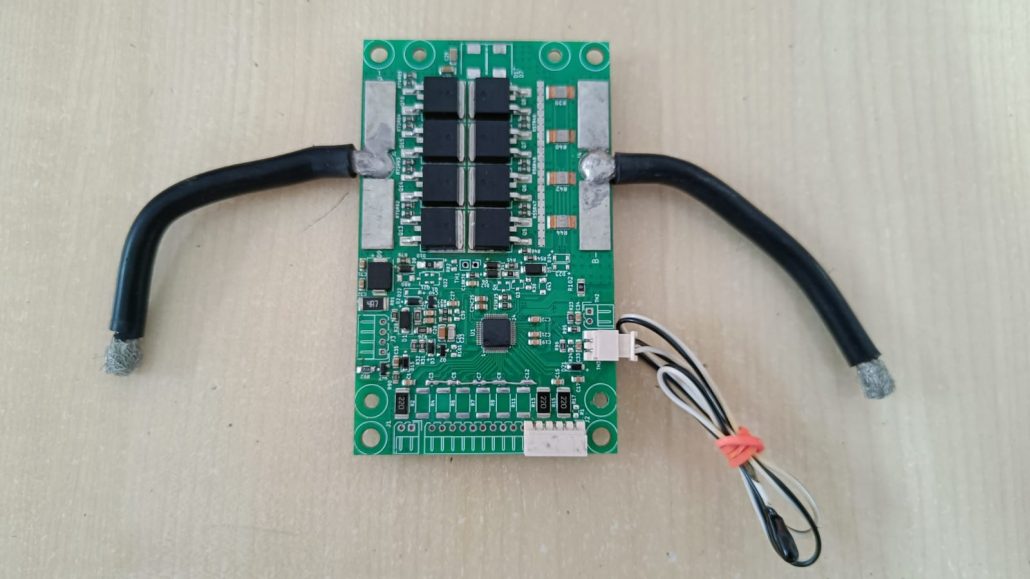
How to check if BMS is working?

Monitoring:

BMS PCBA monitoring refers to the specific process of tracking and analyzing data collected by the BMS printed circuit board (PCBA). This data is crucial for ensuring the safe and efficient operation of the battery pack.

Here’s a closer look at what BMS PCBA monitoring typically involves:

Data Acquisition:

  • The BMS PCBA continuously collects data from various sensors, including:
    • Cell voltages – monitors the voltage of each cell in the battery pack.
    • Current – tracks the current flowing into (charging) or out of (discharging) the battery.
    • Temperature – measures the temperature of the battery pack.

Data Analysis:

  • This collected data is then fed into the microcontroller on the PCBA.
  • The microcontroller analyzes the data against pre-defined thresholds for safe operation.
  • It checks for:
    • Overvoltage or undervoltage of individual cells or the entire pack.
    • Excessive charging or discharging currents.
    • Temperatures exceeding safe limits.

How to check if BMS is working?

Alerts and Actions:

  • If any parameter falls outside the safe zone, the BMS PCBA can trigger alarms or take corrective actions:
    • Alerts might be visual indicators on the device itself or transmitted to external systems for monitoring.
    • Corrective actions can involve:
      • Disconnect the battery from the charger or load to prevent damage.
      • Initiating cell balancing to equalize voltages between cells and improve battery health.

Additional Monitoring Features:

  • Depending on the BMS PCBA complexity, monitoring can extend beyond basic parameters:
    • State of Charge (SOC): This estimates the remaining capacity in the battery.
    • State of Health (SOH): This indicates the overall health and degradation of the battery over time.
    • Data logging: The BMS PCBA might store historical data on battery performance for further analysis.

By effectively monitoring the BMS PCBA data, you can gain valuable insights into the battery’s health and performance. This allows for:

  • Early detection of potential issues: Identifying problems before they cause damage can prevent costly repairs or downtime.
  • Predictive maintenance: Monitoring data can help predict when maintenance is needed, optimizing battery life and performance.
  • Improved safety: By ensuring the battery operates within safe limits, BMS PCBA monitoring minimizes safety risks associated with battery failures.

How to check if BMS is working?

Overall, BMS PCBA monitoring plays a vital role in ensuring the safe, reliable, and efficient operation of battery packs across various applications.

  • The BMS PCB continuously monitors important battery parameters like:

    • Voltage of individual cells and the entire pack
    • Current flowing in and out of the battery
    • Temperature of the battery pack
  • Sensors on the PCB collect this data and send it to the brain of the system:

Control and Protection:

BMS PCB control and protection are the two key functions that work together to safeguard your battery pack and optimize its performance. Here’s a detailed explanation of each:

Control:

  • Cell Balancing: Lithium-ion battery packs consist of multiple cells connected in series. Ideally, all cells should discharge and charge at the same rate. However, slight manufacturing variances or uneven usage can lead to imbalances. The BMS PCB can employ cell balancing to address this. It monitors individual cell voltages and, if a discrepancy arises:

    • It activates passive balancing circuits that redistribute charge from higher voltage cells to lower voltage ones, bringing them closer to a balanced state.
    • In some advanced systems, active balancing might be used, involving dedicated circuits to transfer charge more efficiently.
  • Current Management: The BMS PCB plays a crucial role in managing the current flow within the battery pack:

    • Over-current Protection: If the charging or discharging current exceeds a safe limit, the BMS PCB can intervene by:
      • Limiting the current electronically using MOSFETs (Metal-Oxide-Semiconductor Field-Effect Transistors).
      • Disconnecting the battery from the charger or load entirely in severe cases.
    • Short-Circuit Protection: In case of a short circuit within the battery pack, the BMS PCB can quickly disconnect the battery to prevent damage from excessive currents and overheating.

How to check if BMS is working?

Protection:

The BMS PCB implements various safeguards to shield the battery from harmful conditions:

  • Overcharge Protection: Lithium-ion batteries can be permanently damaged by excessive voltage during charging. The BMS PCB monitors the total pack voltage and individual cell voltages. If the voltage reaches a pre-set overcharge threshold:

    • It can terminate the charging process by disconnecting the battery from the charger.
    • In some cases, it might activate safety features within the charger itself.
  • Over-discharge Protection: Deep discharging a lithium-ion battery below its minimum safe voltage can significantly reduce its lifespan or even cause permanent damage. The BMS PCB monitors the total pack voltage and individual cell voltages. If the voltage falls below a pre-set over-discharge threshold:

    • It can disconnect the load to prevent further discharge.
    • It might issue a warning or shut down the device entirely.
  • Temperature Protection: Extreme temperatures can degrade battery performance and safety. The BMS PCB monitors the battery pack’s temperature. If the temperature exceeds a safe limit:

    • It might reduce the charging or discharging current to prevent further heating.
    • In severe cases, it can completely disconnect the battery to allow it to cool down.

By implementing these control and protection features, the BMS PCB ensures the battery operates within safe voltage, current, and temperature ranges. This safeguards the battery from damage, extends its lifespan, and maximizes its performance

  • A microcontroller on the PCB analyzes the data based on pre-programmed safety thresholds.
  • If any parameter exceeds the safe limits (e.g., the voltage gets too high or low, the temperature rises excessively), the microcontroller takes corrective actions:
    • It can disconnect the battery from the charger or load (depending on charging/discharging) using electronic switches (MOSFETs).
    • In some cases, it might initiate cell balancing to equalize voltages between cells in the pack.

Overall, the BMS PCB works to:

  • Ensure safe operation of the battery by preventing overcharging, over-discharging, and overheating.
  • Maximize battery lifespan by keeping it within optimal operating conditions.
  • Improve battery performance by managing current flow and cell balancing.

How to check if BMS is working?

The complexity of a BMS PCB can vary depending on the application. Some basic PCBs might just focus on essential protection features, while more advanced ones can offer additional functionalities like data logging and communication with external systems.
What is Transformer?CategoriesNews

What is Transformer?

What is a Transformer?

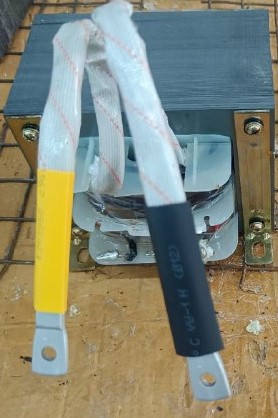
What is Transformer?, transformer is an electrical device that uses electromagnetic induction to pass an alternating current (AC) signal from one electric circuit to another, often changing (or “transforming”) the voltage and electric current. Transformers do not pass direct current (DC), and can be used to take the DC voltage (the constant voltage) out of a signal while keeping the part that changes (the AC voltage). In the electrical grid transformers are key to changing the voltages to reduce how much energy is lost in electrical transmission.

Transformers change the voltage of the electrical signal coming out of the power plant, usually increasing (also known as “stepping up”) the voltage. Transformers also reduce (“step down”) the voltage in substations, and as distribution transformers.[2] Transformers are also used as a part of devices, like current transformers.

How transformers work

It often seems surprising that a transformer keeps the total power the same when the voltage goes up or down. One must keep in mind that when the voltage goes up, the current goes down:

What is Transformer?

Transformers use electromagnetic induction to change the voltage and current. The transformer action, known as transformer action, explains how the transformer converts an AC signal from its primary to its secondary component. When an AC signal is applied to the primary coil, the changing current causes a magnetic field to change (get bigger or smaller). This changing magnetic field (and associated magnetic flux) will pass through to the secondary coil inducing a voltage across the secondary coil, thereby effectively coupling the AC input from the primary to secondary component of the transformer. The voltage applied to the primary component will also be present in the secondary component.

As mentioned before, transformers do not allow DC input to flow through. This is known as DC isolation. This is because a change in current cannot be generated by DC; meaning that there is no changing magnetic field to induce a voltage across the secondary component.

What is Transformer?

What is Transformer?
Transformer
What is Transformer?

Figure 1. A simple operating transformer. Currently comes with a voltage. The current passes through the windings creating magnetic flux in the iron core. This flux is traveling through loops of wire on the other circuit. This creates a current and a voltage difference in the second circuit of. The electric power () stays the same.

The fundamental principle that allows transformers to change the voltage of alternating current is the direct relationship between the ratio of loops of wire in the primary winding to the secondary winding and the ratio of the primary voltage to the output voltage. The ratio between the number of turns (or loops) in the primary coil to the number of turns in the secondary coil is known as the turns ratio. The turns ratio establishes the following relationship with voltage:

  • Please make a note of the following text: “Number of turns in the primary coil.”
  • Please remember the following text: “Number of turns in the secondary coil.”
  • Certainly! Here is the revised text: “Please remember the following text: “
  • Certainly! Here is the revised text: “Please remember the following text: “
  • Please remember the following text: “Voltage across the secondary.”
  • “Please remember the following text: ‘Current through the primary.'”

From this equation, if the number of turns in the primary coil is greater than the number of turns in the secondary coil (), then the voltage across the secondary coil will be less than in the primary coil. This is known as a “step-down” transformer, because it lowers, or steps down, the voltage. The table below shows common types of transformers used on the electrical grid.

What is Transformer?

Transformer Type Voltage Turns ratio Current Power
Step down input (primary) voltage > output (secondary) voltage p>s p<s p=s
Step up input (primary) voltage < output (secondary) voltage p<s p>s p=s
One-to-one input (primary) voltage = output (secondary) voltage p=s p=s p=s

What is Transformer?

The one-to-one transformer will have equal values for everything and is used mainly to provide DC isolation.

step-down transformer will have a higher primary voltage than secondary voltage, but a lower primary current value than its secondary component.

In the case of the step-up transformer, the primary voltage will be lower than the secondary voltage, meaning a greater primary current than the secondary component.

What is Transformer?

What is Transformer?

Efficiency

Under ideal conditions the voltage and current change by the same factor for any transformer, which explains why the primary power value is equal to the secondary power value for each case in the above table. As one value decreases the other increases to keep at a constant equilibrium power level.

Transformers can be extremely efficient. High-power transformers can reach the 99% mark of efficiency, as a result of successes in minimizing transformer losses. However, a transformer will always output a slightly lower power than its input, as losses cannot be eliminated. There is some transformer impedance.

To learn more about transformers please see hyperphysics.

What are the efficiency losses of transformers?CategoriesTechnology Blogs

What are the efficiency losses of transformers?

What are the efficiency losses of transformers?

In this article, we will learn about the four main types of transformer losses and calculations for finding the efficiency of a transformer.

What are the efficiency losses of transformers?

What are the efficiency losses of transformers?
Transformer

Transformers, like all devices, are not perfect. While ideal transformers do not have losses, real transformers have power losses. A transformer’s output power is always slightly less than the transformer’s input power. These power losses end up as heat that must be removed from the transformer. The four main types of loss are resistive loss, eddy currents, hysteresis, and flux loss.

What are the efficiency losses of transformers?

Resistive Loss:-

Resistive loss, I2R loss, or copper loss, is the power loss in a transformer caused by the resistance of the copper wire used to make the windings. Since higher frequencies cause the electrons to travel more toward the outer circumference of the conductor (skin effect), electrical disturbances called harmonics have the effect of reducing the wire size and increasing resistive loss. These losses are the same as the power losses in any conductor and are calculated as follows:

𝑃=𝐼2𝑅

where

P = power (in W)

I = current (in A)

R = resistance (in Ω)

For example, if a transformer primary is wound with 100′ of #12 copper wire that carries 15 A, what is the resistive loss in that coil?

The resistance of #12 copper wire is 1.588 Ω/1000′ at room temperature. Therefore, the resistance of 100′ of the wire is 0.1588 Ω.

𝑃=𝐼2𝑅=152×0.1588=35.7𝑊

The transformer’s primary wiring consumes 35.7 W of power that is wasted as heat. If the transformer is not cooled properly, this heat increases the temperature of the transformer and the wires. This increased temperature causes an increase in the wire resistance, and the voltage drops across the conductor. This loss varies with the current and is always present in the primary when it is energized. The secondary sees very little loss of this type when unloaded.

Note

Changes that an electric utility makes to power delivery can affect the operation of in-plant transformers. A new area substation can boost the delivered voltage. New factories or commercial buildings may increase the local load and decrease the voltage available. The taps on in-plant transformers may need to be adjusted.

What are the efficiency losses of transformers?

Eddy Current Loss:-

Eddy current loss is power loss in a transformer or motor due to currents induced in the metal parts of the system from the changing magnetic field. Any conductor that is in a moving magnetic field has a voltage and current induced in it. The iron core offers a low reluctance to the magnetic flux for mutual induction. The magnetic flux induces current at right angles to the flux. This means that current is induced across the core. This current causes heating in the core. The heat produced by eddy currents increases as the square of the frequency. For example, the third harmonic (180 Hz) has nine (32) times the heating effect of the fundamental (60 Hz) frequency.

Constructing the core from thin sheets of iron laminated together can minimize this loss. The thin sheet-iron layers shorten the current path and minimize the eddy currents (see Figure 1). Each sheet is coated with an insulating varnish that forces these currents to only flow within individual laminations. This reduces the overall eddy currents in the entire core. These thin sheets are manufactured from silicon-iron or nickel-iron alloys that can be magnetized more readily than pure iron. The use of alloy cores also improves the age resistance of the core. The sheets are often made from 29-gauge alloy, which is only 0.014′′ thick.

Transformer Losses and Efficiency

What are the efficiency losses of transformers?

Hysteresis Loss:-

Hysteresis loss is loss caused by the magnetism that remains (lags) in a material after the magnetizing force has been removed. Magnetic domains are small sections of a magnetic material that act together when subject to an applied magnetic field. Magnetic domains have magnetic properties and move in iron when subjected to a magnetic field. When the iron is subjected to a magnetic field in one polarity, the magnetic domains will be forced into alignment with the field. When the polarity changes twice each cycle, power is consumed by this realignment, and this reduces the efficiency of the transformer. This movement of the molecules produces friction in the iron, and thus heat is a result. Harmonics can cause the current to reverse direction more frequently, leading to more hysteresis loss. Hysteresis is reduced through the use of highly permeable magnetic core material.

What are the efficiency losses of transformers?

Flux Loss:-

Flux loss occurs in a transformer when some of the flux lines from the primary do not pass through the core to the secondary, resulting in a power loss. There are two main reasons for flux lines to travel through the air instead of through the core. First, the iron core can become saturated so that the core cannot accept any more flux lines. The lines of flux then travel through the air and are not cut by the secondary. Second, the ratio of the reluctance of the air and the core in the unsaturated region is typically about 10,000:1. This means that for every 10,000 lines of flux through the core, there is 1 line of flux through the air. Flux loss is generally small in a well-designed transformer.

Transformer Losses and Efficiency

Transformer Efficiency:-

The ratio of a transformer’s output power to its input power is known as transformer efficiency. The effect of transformer losses is measured by transformer efficiency, which is typically expressed as a percentage. The following formula is used to measure transformer efficiency:

𝜂=𝑃𝑂𝑈𝑇𝑃𝐼𝑁

where

η = transformer efficiency (in %)

POUT = transformer output power (in W)

PIN = transformer input power (in W)

Example: What is the efficiency of a transformer that has an output power of 1500 W and an input power of 1525 W?

𝜂=𝑃𝑂𝑈𝑇𝑃𝐼𝑁=1500𝑊1525𝑊=98.36

The efficiencies of power transformers normally vary from 97 to 99 percent. The power supplied to the load plus resistive, eddy current, hysteresis, and flux losses must equal the input power. The input power is always greater than the output power.

What are the efficiency losses of transformers?